Showing posts with label contemporary. Show all posts

Wednesday, January 8, 2014

Review: The Sea of Tranquility by Katja Millay

Tags: young adult, contemporary, PTSD, romance

Summary
Former piano prodigy Nastya Kashnikov wants two things: to get through high school without anyone learning about her past and to make the boy who took everything from her—her identity, her spirit, her will to live—pay.

Josh Bennett’s story is no secret: every person he loves has been taken from his life until, at seventeen years old, there is no one left. Now all he wants is be left alone and people allow it because when your name is synonymous with death, everyone tends to give you your space.

Everyone except Nastya, the mysterious new girl at school who starts showing up and won’t go away until she’s insinuated herself into every aspect of his life. But the more he gets to know her, the more of an enigma she becomes. As their relationship intensifies and the unanswered questions begin to pile up, he starts to wonder if he will ever learn the secrets she’s been hiding—or if he even wants to.

The Sea of Tranquility is a rich, intense, and brilliantly imagined story about a lonely boy, an emotionally fragile girl, and the miracle of second chances. [summary from Goodreads]
Review

This is one of those unusual circumstances where I definitely remember loving the book as I was reading it--going so far as to plan to myself that I would give it 5 stars--but, upon reflection months later, I can't seem to recall a single element of this story that had transfixed me so. Peculiar, isn't it? I didn't even remember the main characters' names, their conflict, or the plot. This put me in a bit of a difficult position. How could I possibly rate a book highly if it left so little of an impression on me? For my other 5-star books, I can quote quotes and allude to characters' quirks even outside of my reading life. Where, then, should THE SEA OF TRANQUILITY fall?

Despite not even remembering the characters' names, I think that what got to me most while reading this book was how thoroughly Millay's prose swept me up into Nastya and and Josh's love story. Millay's writing perfectly reflects the emotional responses she wishes to wring from readers: the frustratingly languid slow burn of two messed-up people learning to open themselves up to each other. In that way, then, THE SEA OF TRANQUILITY's prose is a more accurate depiction of real-life love than most love stories we read. There is a degree of, shall we say, "life editing" that goes on when writing a story. (No one wants to read about all the meals your character ate or the number of times he/she went to the bathroom, after all.) While this is a perfectly legitimate and understandable narrative practice, it makes it all too easy for us readers to (consciously) forget that storytelling is life edited down to its enticing and relevant bits.

I mean, I get it. I read stories too because I love fiction and want to escape reality. But every once in a while I love the book that makes me aware of the differences between narrating fiction and narrating life, the book that challenges pacing conventions while still triggering a positive emotional response from me. Intriguingly enough, it is this awareness that makes that particular story all the more poignant to me. This year, THE SEA OF TRANQUILITY was that book. And while I don't anticipate rereading it--some stories are like that, you know: you don't feel the necessity of reading them again--I certainly don't regret the (considerable amount of) time I spent with Nastya and Josh.

(This review would've been drastically different had I written it the day after I finished the book. Or am I trying to justify the horrendous fact that I wrote a review six months late?? Hehe.)

Cover discussion: My feelings toward this cover are mixed. It definitely lures you in with the guarantee of romance. On the other hand, beyond the romance aspect, I'm not sure it has any connection to this book in particular--like, this cover could be one for any of the many romances published every year.

Atria / Nov. 13, 2012 / Paperback (reprint) / 450pp. / $15.00

e-galley provided by the publisher and NetGalley.

Monday, December 16, 2013

Review: Forgive Me, Leonard Peacock by Matthew Quick

Tags: young adult, contemporary, suicide, murder, bullying

Summary
Today is Leonard Peacock's birthday. It is also the day he hides a gun in his backpack. Because today is the day he will kill his former best friend, and then himself, with his grandfather's P-38 pistol.

But first he must say good-bye to the four people who matter most to him: his Humphrey Bogart-obsessed next-door neighbor, Walt; his classmate Baback, a violin virtuoso; Lauren, the Christian homeschooler he has a crush on; and Herr Silverman, who teaches the high school's class on the Holocaust. Speaking to each in turn, Leonard slowly reveals his secrets as the hours tick by and the moment of truth approaches.

In this riveting book, acclaimed author Matthew Quick unflinchingly examines the impossible choices that must be made—and the light in us all that never goes out. [summary from Goodreads]
Review

FORGIVE ME, LEONARD PEACOCK is arguably one of the most explosive and important books of this year, but if you knew nothing about Matthew Quick, most famously the author of Silver Linings Playbook, you probably wouldn't expect it. Which would be a shame on your part.

It was almost that way for me. In the beginning, I was rather unimpressed by Leonard as narrator. He seemed to come off as just another socially awkward teenager trying to hard to be nonchalant. But, like a hypnotist, his reasoning for why he was going to kill himself--his cool-headed explanations for why it was absurd to keep on living just to be just another blank-faced automaton adult in the rat race--snake-charmed its way into my head, until I found myself nodding along and thinking, "Oh man. This guy is absolutely right. What is the big deal about living when most adults are so unhappy? Why haven't I killed myself yet?"

You see, that is the power of this book. Its main character has a goal that we'd never condone, and yet it's not at all difficult for us to understand where he's coming from. Leonard Peacock is a totally convincing potential murder-suicide. That's why I feel like this book is so important: it's one of the most convincing looks inside the mindset of the ones behind the recent troubling trend of teenage killings.

Cover discussion: I normally don't really like text-art covers, but this one.... I mean, there is no way to adequately describe the experience you will get from reading this book, so I don't even care one way or another what's on the outside.

Little, Brown / Aug. 13, 2013 / Hardcover / 278pp. / $18.00

e-galley provided by publisher and NetGalley. Thank you!

Thursday, June 20, 2013

Review: Wild Awake by Hilary T. Smith

Tags: young adult, contemporary, grief, music, piano, mental illness

Summary


When a strange caller informs young pianist Kiri Byrd he has the remains of her dead sister’s stuff—a sister who had been dead for years—Kiri’s life turns upside down. Kiri struggles to piece together what she’s learning about her sister, but doing so sets her on a crash course towards a breakdown, and only by acknowledging it can Kiri hope to live with it, to make it a part of herself.

Review

With the weight of the expectations I placed upon its spine after declaring its synopsis to be one of the best I’d ever encountered, Hilary T. Smith’s debut novel WILD AWAKE had a lot to live up to. Fortunately, it was more than up to the task. WILD AWAKE reminded me of the best type of our favorite and revered Aussie YA: it’s whimsical and more than a little odd, but ultimately grounded in the solid reality of common emotions.

WILD AWAKE has many strengths, one of which is its startling and beautiful prose. It startles you because Smith is, oftentimes, just noting in passing an everyday detail or thought—only she does so in a way that makes you pause and actually notice what you otherwise would not. The prose tinkles like water trickling over crystal. Its brightness combines with the darker undertones of Kiri’s situation for a full symphony of bass emotions and soprano wonder.

From the start, Kiri as protagonist stands out. She is many things, has many identities—a serious pianist, a quipper; a dutiful daughter, a monomaniac—but she owns them all unabashedly, deliberately. Unlike other, forgettable YA protagonists who claim to be artists or rebels or whatever, Kiri doesn’t say: she just is, and that makes her being genuine. She’s unafraid to plunge herself into making mistakes, with the result that she gets more out of life than those who hang back. The times when she descends into a whirlwind of monomania are thrilling yet terrifying to read, because you see why she does it, why she needs to let herself go like that, and yet despite how seemingly carefree she is in those moments, you know it’s barely masking a deep, deep hurt. I desperately wish Kiri was real, because I think that her fearlessness, whether or not it’s enviable or reckless, would make me a better person.

That being said, in the end, it’s difficult to say what this book is about. The synopsis emphasizes the mysterious circumstances of Kiri’s sister’s death, but besides for being the catalyst for what happens in the book, finding out more about Sukey and what happened to her becomes less and less of a priority as the book flows along, replaced by Kiri’s deterioriating mental state. Which is a fine direction for a story to go, but still, a little…disorienting.

Nevertheless, WILD AWAKE was a story that lived up to its promises. It is more than the sum of its parts, more than just delectable prose, sympathetic character, and endearing family mystery. Go in with no anticipation of conventions, and enjoy the wild-awake ride.

Similar Authors
Leanne Hall
Cath Crowley
Beth Kephart
Tara Kelly

Cover discussion: LOVE the colors. Not the biggest fan of the double exposure that is reminiscent of photography projects produced by emo/hipster-wannabe college students.

Katherine Tegen Books / May 28, 2013 / Hardcover / 384pp. / $17.99

e-galley received for review from publisher and Edelweiss. Thank you!

Thursday, May 16, 2013

Review: Truth or Dare by Jacqueline Green

Truth or Dare, Book 1

Tags: YA, contemporary, mystery, suspense, thriller, betrayal

Summary

Echo Bay is a picture-perfect oceanside town with the expected batch of annual summer tourists and year-round privileged white teens. But it has an ominous claim to fame: several times in past Fall Festivals, a beautiful young woman mysteriously dies out in the water by Phantom Rock.

Little of this matters, however, with Tenley Reed’s arrival back in town. Wanting to claim her old life as the most popular and most desired girl in her grade, she throws one of her infamous house parties, complete with one of the Truth or Dare games for which she’s known. But this time, an unknown darer continues the game long past it’s time to end it. Three girls start receiving dares that they must follow through for fear of the darer exposing their deepest secrets: Tenley; her best friend Caitlin, the perfect All-American with the Harvard dream; and Sydney, the scholarship student. And for reasons they don’t know, the darer is not going to stop until they are all dead…

Review

I was hoping, when I picked this book up, that it would defy my expectations. With a synopsis that sounded like it had been lifted directly from a rejected Pretty Little Liars installment, I’ll admit that my expectations weren’t high. And while I did finish the book (which says something, I suppose, considering how I’m not afraid to DNF a book that I don’t have a chance of loving), I kind of wish that, well, I hadn’t.

Throughout the whole book, I kept on shaking my head and saying to myself, “What’s wrong with this, Steph? The writing is decent—it fulfills the basic requirements of a YA blockbuster—and yet, despite the fact that I am reading it, I have an utter lack of investment in the characters and their fates.” What, exactly, did TRUTH OR DARE lack that kept it only mediocre?

And then I realized: it was lacking a heart. There is no non-superficial reason for caring about the characters. Superficiality in fiction differs from superficiality in real life. In real life, superficiality refers to physical, tangible things like appearances or dress or money. In fiction, it refers to the lack of spark that makes the characters never read like anything more than a couple of puppets. And it doesn’t matter how many oh-so-sad tragedies you want to pile on a character—Tenley’s father, Sydney’s past, Caitlin’s kidnapping, Caitlin’s panic attacks, Caitlin’s everything—the fact is that the author did not succeed in making her characters come alive with personality quirks and turns of phrase and all those things that make a person unique. It doesn’t take a really jaded reader to notice this.

(Side note: TRUTH OR DARE is a product of Paper Lantern Lit, a company that essentially develops elaborate plots and then hires new authors to write the stories. I didn’t learn this until after I had already finished the book. The correlation between PLL-style books and—in my opinion—their general lack of heart has yet to be scientifically examined.)

Despite the lack of heart and my lack of investment in the characters, I still kept on reading, drawn by the idea that all would be revealed, and several hours’ worth of my time would be justified. That was before I got to the thoroughly unrewarding ending, which, compared to the tight plotting of the rest of the book, was sloppy, a slap-dash anti-climax put together as a weak payoff before the mystery continues painfully on to a Book Two. What the hell?! Is it too much to ask for some sort of payoff, some sort of conclusion, after trudging through 400 pages of drivel tailor-made for the nonthinking YA reader? There is no clearer sign that this was a concept created for purely financial reasons than such a cop-out ending that basically demands that if you wanted to be invested in the story, you had better be in it for the long haul. Too bad that wasn’t made clear earlier in the story for the rest of us who have no interest in making that sort of an investment in a forgettable teen mystery series.

Oh, I have no doubt that this book will find its audience. It’s just the sort of mediocre copycat drivel that drives the market nowadays.

Similar Authors
Sara Shepard
Kate Brian

Cover discussion: No comment. Next question.

Poppy / May 14, 2013 / Hardcover / 400pp. / $18.00

e-galley received from publisher and NetGalley for review.

Tuesday, May 14, 2013

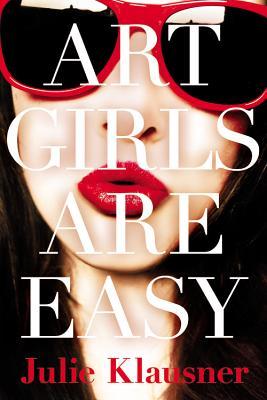
Review: Art Girls Are Easy by Julie Klausner

Tags: young adult, contemporary, summer camp, art, friendship, sex

Summary

Fifteen-year-old Indigo Hamlisch is an art prodigy looking forward to her last summer at the Silver Springs Academy for Fine and Performing Arts for Girls. But her BFF Lucy Serrano is a C.I.T. this year, and that means she doesn't have to hang out with Indigo and the other campers anymore: she can mingle with the counselors -- including Indigo's scandalous and unrequited crush, paint-splattered art instructor Nick Estep. But it's not like anything is going to happen between Lucy and Nick... right? As Indy becomes more and more paranoid about what's going on between her best friend and her favorite counselor, Indy's life -- and her work -- spin hilariously out of control. Funny and bold, Art Girls Are Easy is a comedy of errors filtered through the wry, satirical eyes of a girl who's been there, done that, and is just looking for a little inspiration. [summary from Goodreads]

Review

The first line of this book reads: “Indigo Hamlisch stared out of the window of her father’s gray Mercedes Coupe and thought about sex.”

Personally I find this opening tasteless, like it’s attempting to be shocking and edgy but failing miserably, kind of like the wannabe screaming vulgar things at an intimate concert in an attempt to be cool and being met with dead silence by the much classier crowd. However, after suffering through the whole book, I duly acknowledge the utter appropriateness of this opening line: it perfectly represents how unsuccessfully the book attempts to discuss issues of sexuality, body image, friendship, art, inspiration, and privilege. On top of that, ART GIRLS ARE EASY had a jumbled plot and weak character development. All in all, a hot mess.

ART GIRLS ARE EASY wants to be cool. It wants to be the hip new thing that people are talking about, the story that owns criticism and commerciality, the trend that turns people’s thinking upside-down. Unfortunately, it had no idea where to begin doing so. What is the focus of this book, anyway? The jacket synopsis claims that it’s about Indigo and Lucy’s changing best-friendship, but the complexities of this new chapter in their lives hardly appear. Every once in a while, Lucy deigns to come find Indy, they exchange sweet nothings for a few lines, and then Lucy dashes off, leaving Indy behind to feel inferior and insecure. In theory this is what friends drifting apart is like—but the drifting apart needs to be apparent in the harmful way they interact with each other, to show an unhealthy relationship. This book is so confused about whether or not Lucy is the villain that it tries to do a little of everything, with (predictably) poor results: for 90% of the book, we’re led to believe that Lucy is the bad and selfish friend who is just using the less attractive Indy to bolster her own self-esteem, but then apparently their misunderstandings are cleared up in a matter of a few pages at the end, Lucy’s attractiveness is balanced out by Indy’s far superior artistic talent, and Lucy and Indy go skipping off into the sunset. Huh? This is a fine ending ideally, but little exists in the book to convince readers of the strength and veracity of their friendship.

In fact, Indy and Lucy’s friendship rollercoaster takes a side-seat to the main spectacle that is Indy falling apart due to her insecurities. Scenes of Indy eating her feelings, lashing out at others, and even hurting herself could’ve been a moving reflection on adolescent self-esteem. I mean, this is serious stuff! But apparently Indy’s behavior is invalid because her perfect best friend never wavered in her loyalty. Um, what? Are we not going to discuss how, sadly, too many wonderful girls like Indigo will also have body image issues and thoughts of self-mutilation? Are you really going to send the message that as long as the insecure girl is loved by her attractive, nice, and perfect best friend, everything is going to be fine?

But perhaps most infuriating of all—if such a thing can be decided from the myriad choices we have—is how ART GIRLS ARE EASY makes no acknowledgment of the way privilege works in the characters’ lives. Silver Springs is a summer art camp that will make your university look like an overpriced homeless shelter. Throughout the book, characters continuously flaunt their privilege to get their way. They discuss how they’ll use their parents’ money to get the camp to fire a teacher, their parents’ connections to nab them a starring role in such-and-such production alongside Meryl Streep. They acknowledge how they only go to camp in order to make the connections that will get them the careers they want. It’s like Harvard for artsy high schoolers, and the book does not even try to comment on the disgusting excess that is the privilege here. No character is immune from the benefits of privilege—including Indigo. The most the book says about the glutton of privilege that exists in the book is a throwaway passage at the end:
“In no way did [Indigo’s] dad’s money talk negate the sense of accomplishment she felt around her piece. But, she figured, his donation was probably relevant to her Fairness Committee verdict. For the first time, she felt she had a better insight into the machine that kept this place running. This odd, terrible, wonderful place.”
That’s it. No lesson learned about privilege. The book totally passed on the opportunity to open readers’ eyes up to the existence of privilege in our lives and the extreme social stratification that results.

The very fact that ART GIRLS ARE EASY so desperately tries to be cool upends any promise it had of being a halfway decent story. Its faux-edginess is only outdone by its inexcusable misunderstanding of teenage thoughts and feelings. And its unquestioning attitude towards privilege—unacceptable in today’s socioeconomic situation—is the rotten cherry on top of a shapeless, flavorless cake with all the nutritional content of a vat of high fructose corn syrup.

Poppy / May 7, 2013 / Paperback / 240pp. / $16.00

e-galley received from publisher and NetGalley for review.

Monday, April 1, 2013

Review: This Is What Happy Looks Like by Jennifer E. Smith

Tags: YA, contemporary, romance, small towns

Summary

G emails E by accident and the two strike up a never-ending interaction that both feel is one-of-a-kind. There are only several problems that the two of them can’t work out. First, G is Graham Larkin, the hottest new Hollywood star with a bevy of teenaged female fans all around the world and an almost equally large crowd of paparazzi following him everywhere. And E is Ellie O’Neill, a dreamer-poet living in Middle-of-Nowhere, Maine, who has her own reasons for wanting to avoid the spotlight.

Review

I was head over heels for the first 25% of the book, and then meh for the rest of it. Oh, there’s nothing wrong with THIS IS WHAT HAPPY LOOKS LIKE at all, but immediately after the two main characters finally met up, the romantic anticipation fizzled and there was a sense of “what next?” floating among readers and the narrative.

Don’t get me wrong: Graham and Ellie are adorable, separately and together. They are the kind of people you want dating your best friends: they’re nice and well-read and like sunsets and cute animals and hand-holding. Yes, things in this book’s world are a bit tame, especially Graham’s oh-so-cutesy humor, but hey, I’m not going to hold that against the book: it’s rare that we find a YA romance where at least one party is not either TSTL or a jerk.

For the most part, THIS IS WHAT HAPPY LOOKS LIKE is a dream come true for readers who, like me, wished their whole lives for a squee-worthy romance between a nice movie star and a nice ordinary girl. But then, as in most Jennifer Smith novels, there’s the extra dimension of family problems. Again, there’s nothing inherently wrong with including family issues into a contemporary romance, but it just wasn’t what I wanted to read about when I picked this book up. I wanted the never-gets-old sparkly tension of falling in love with someone new, of gradually getting to know them through cheeky emails, of the first time seeing them and thinking to yourself, “Oh. I have been waiting for this my whole life.” Only all of that happened in the first quarter of the book, and then the rest of it didn’t seem to add much more to Graham and Ellie’s relationship. It just didn’t do it for me.

Nevertheless, I would still recommend THIS IS WHAT HAPPY LOOKS LIKE to readers looking for a light romance. The characters and the picture-perfect setting of small-town Maine make this the YA romance that a lot of readers are looking for.

Similar Authors
Kristan Higgins
Maureen Johnson

Cover discussion: I really like how Jennifer Smith's last two contemporary romances have gotten these related but still distinctive covers. They stand out from the stock-photo covers of other YA contemporary romances for their originality.

Poppy / April 2, 2013 / Hardcover / 416pp. / $17.99

e-galley received from publisher and NetGalley.

Monday, March 11, 2013

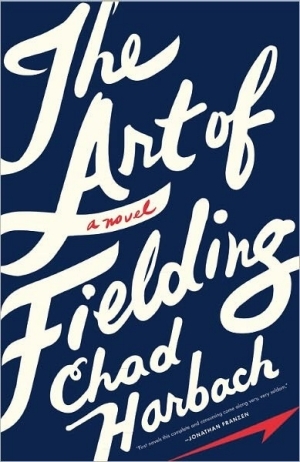
Review: The Art of Fielding by Chad Harbach

Tags: college, baseball, sports, love

Summary

Henry Skrimshander is a good shortstop but a rural Midwestern nobody until Mike Schwartz discovers him and gets him onto the Westish College baseball team, where, under Schwartz’s careful coaching, he blooms into a brilliant Major League prospect. Henry seems on track for the dream until a terrible accident on the baseball diamond occurs and upends his confidence. If that could happen once, couldn’t it happen again and again and again?

As Henry spirals downward, however, those around him—his roommate, the college president, the president’s daughter, and Schwartz—have their own problems. And by the time the season is over, every one of them will be irrevocably changed.

Review

I expected witty, swoonworthy college lit in a baseball setting. I got adolescent romantic angst masquerading as enlightened adult philosophizing. THE ART OF FIELDING is a decent—dare I say enjoyable?—read if you don’t go in expecting what I did, but just kind of a drag if you were expecting that.

The good: If you like odd romantic pairings, varsity athletes undergoing emotional crises, and almost-John-Green-like philosophical insights, you’ll enjoy THE ART OF FIELDING. The writing is really not bad, although definitely nothing mind-blowing. There’s a handful of witty dialogue that will let a chuckle or two escape, and if you’re a fan of the self-identifying “gay mulatto Buddhist roommate” character trope, you’ll enjoy Owen Dunne.

The not so good: While the first third was enjoyable as we witnessed Henry’s rise from good to great, the rest of the book gets bogged down in angst. And by angst, I actually mean ANGST. You have the expected angst of Henry agonizing over his mistake, but you also have the angst of some troubled maybe-lovers with childhoods that they agonize over but are never fully shown to readers, and you also have the angst of a SIXTY-YEAR-OLD MAN IN LOVE. And I’m not trying to be ageist, but rather remarking about how vomit-inducing it is to read about Affenlight’s love described using the literary equivalent of baby’s breath, rose-petal showers, and soft soft skin. If I want those kinds of descriptions of love, I’ll read Keats. I want my depictions of love grittier, less rose-tinted, more realistic, and it was a real drag for me to be subject to such descriptions of what I suppose the author believes to be “a true, perfect, and untarnished love.”

What does all this angst amount to? Not much. I don’t mind, and may even appreciate, angst if it seems justified and their reasons are shown well, but THE ART OF FIELDING doesn’t do that. Rather, we’re told that such-and-such a thing from such a character’s past has influenced him or her to act the way he or she is acting. And that’s not enough. It’s not enough for the author to just tell me, at the beginning of a chapter early on in the book, that a character had a bad childhood and daddy issues, because, by not showing this backstory, a bad childhood and daddy issues simply become lame excuses for sloppy characterization. As a result, Pella and Schwartz interact like cavemen, each one grunting obscurely things like, “So is that what you want? Yeah, that’s what I want. So that’s it? Yeah, that’s it. I hope you’re happy. You make me miserable.” I guess some romances in real life actually do pan out that way, but I couldn’t help but think that the author was projecting his desire for an ideal of the blameless relationship overcoming communicative opaqueness onto his characters, which resulted in exasperation on my part.

For those of you who arrived at this book following John Green’s recommendation, I guess I would say that this is like a third or fourth draft that a younger, less philosophically polished John Green might’ve written himself. As such, it’s enjoyable enough, if you’re in the mood for it, but otherwise there are a lot of writerly flaws within that make it a not wholly immersive for the more demanding reader.

Cover discussion: This is totally a "me" thing, because any pseudo-art script-y title doesn't do it for me at all.

Back Bay Books / Paperback (reprint) / May 1, 2012 / 544pp. / $14.99

Personal copy.

Tuesday, February 26, 2013

Review: Ask the Passengers by A.S. King

Tags: young adult, contemporary, LGBTQ

Summary

Astrid Jones’ favorite pastime is to lie on picnic tables, spot planes flying overhead, and send the passengers all her love. She does this because she has no need of love in her life with her messed-up family in small-town Pennsylvania, where neighbors talk about neighbors based on 10% hearsay and 90% stereotypes. And she certainly can’t give her love to the person she thinks she might love…because it’s a girl.

Review

While it does nothing new, Printz Award-winning author A. S. King’s latest book, ASK THE PASSENGERS, does everything old in this subgenre of YA contemporary literature well.

Every year, there are more than a handful of books published about a teen’s gradual awareness of his or her sexual orientation. And I guess that if you want to pick just a handful to represent this subgenre, ASK THE PASSENGERS might be a good choice. Besides for doing the elements of LGBT lit well, it also gets the essentials right. Astrid has an almost soothingly relatable voice, and narrates the could-be-dramatic events of her senior year with a perfect balance of gravity and wit. Supporting characters are not perfect—you’ll start counting the number of times you want to slap Dee, or Astrid’s mom, or Astrid’s sister, or Astrid’s best friend—but their antagonism doesn’t seem to exist solely for the narrative purpose of making readers sympathize with Astrid. Instead, you really get to see why two people would see the same issue in two completely different ways while each believing her way is better…just like in real life.

ASK THE PASSENGERS is a solid read, but because it doesn’t do anything new with this well-trod genre, I’m inclined to think that overall the story will not linger for most readers. Everything gets resolved prettily in a cool 300 pages, despite the previous possibility of there being more layers to familiar issues: Why must each person be totally straight or totally gay? What’s up with Astrid’s mom? While the book hinted at further dimensions in all supporting characters, in the end, the only part of the characters that remain is the part that is relevant to Astrid’s own conflict over her sexual orientation. This led to a “flattened” ending for me, and I was disappointed, as these deviations from the norms of this subgenre were actually what made me most appreciative of this book in the first place.

ASK THE PASSENGERS will most likely most satisfy readers who focus on LGBT lit and readers who are new to this subgenre. While it’s a good literary demonstration of what can be solid about YA lit, it doesn’t push the formula enough to be memorable for me.

Similar Authors
Kirsten Hubbard
Sara Zarr
Kirstin Cronn-Mills

Cover discussion: Besides for being a bit too cheerfully toned for the book (in my opinion), I can definitely see this being Astrid, watching for planes.

Little, Brown / Oct. 23, 2012 / Hardcover / 304pp. / $17.99

e-galley received for review from publisher and NetGalley.

Monday, October 22, 2012

Review: Send Me a Sign by Tiffany Schmidt

Tags: YA, contemporary, cancer

Summary

One day, Mia’s biggest problem was figuring out how serious her crush, the jock Ryan, was about her. The next, it’s learning she has leukemia and trying to hide it from all her friends because she believes that as long as she can make everything stay the same as it’s always been, her cancer will eventually go away as well. But the more Mia tries to act normal, the more it strains her relationships with Ryan and her friends, especially that with Gyver, her longtime guy friend. How long can Mia keep up the deception, and what will happen when people find out?

Review

I approached SEND ME A SIGN with the knowledge that many readers had high expectations for this book, though I didn’t really have any myself. What I got out of my reading experience was that this debut novel squandered a good opportunity to discuss cancer in eye-opening ways and opted instead to be a perfectly, irritatingly run-of-the-mill YA contemporary novel about high school relationship drama.

SEND ME A SIGN could’ve used Mia’s cancer diagnosis as an opportunity to reflect on people’s belief in superstitions: What is the significance of signs to people? Why do people often look for signs in the course of their life, and how is the significance they place in signs affected in light of a life-changing event? Instead, Mia’s superstitions are a mere gimmick that fails to mask the truth about this book: that it is a totally average, totally unoriginal “cancer tale” featuring a hopelessly selfish heroine who never realizes the extent of her privilege and concocts wildly immature justifications for the predicaments she gets herself into with her own narrow thinking.

This book wants us to sympathize or empathize with Mia, the popular, she’s-got-it-all cheerleader whose life unravels from something out of her control—but Mia is no Sam from Lauren Oliver’s Before I Fall or Parker from Courtney Summers’ Cracked Up to Be. Sam and Parker’s are bitchy and self-centered, but we readers could see their flaws and see how they can become better people.

Mia, however, is—oh, how can I put this delicately—inexcusably, horrifically, disappointingly f*****g selfish. I could see the series of decisions she made to end up the way she did, but I wasn’t sympathetic at all to her self-imposed plight, and I didn’t believe at any point in the novel that Mia’s character was redeemable.

Actually, part of me sees this as a problem with the form of the fiction novel. The very fact that Mia refused to give up the appearance of perfection even when inside she was falling apart was easy for her friends and us readers to see: Mia succeeded much less than she thought she did at fooling her friends, and of course, with this book being written in first-person POV, we weren’t fooled at all. This premature understanding on our part of Mia’s Tragic Flaw, however, meant that the majority of this overly long novel was just a cycle of the same events and situations over and over again: Mia has an opportunity to tell the truth, something prevents her from doing so, and she gets into even deeper shit. It’s painfully repetitive with no point and adds nothing to the story’s character or plot development. Most of the story’s major conflicts were set early on, in the first few chapters, and then the characters don’t arrive at any sort of growth until the last few chapters! Maybe it’s just me, but I didn’t need to read nearly 400 pages for the MC to learn something I already knew she had to learn by Chapter 3.

SEND ME A SIGN suffers from a naïve belief that its “deep and sensitive” subject—cancer—will automatically evoke readers’ sympathies and keep readers invested in the story. Uh, no. That’s Fiction Writing 101: even the most intriguing premise can be made into a cure for insomnia by shoddy storytelling. What SEND ME A SIGN really is is a basic high school friendship/love triangle tale with “I’m different because I’m about cancer!” written on its figurative forehead. There is a maybe-maybe-not jock love interest; a group of cheerleaders who try and fail to be more than just an easily forgotten group of privileged white teenage girls; and oh, yes, apparently there is some dude named Gyver who’s supposedly the love interest but kind of just flits in and out of the pages and conveniently forgives Mia for her appallingly selfish behavior because he’s been in love with her his whole life. Like we haven’t read that before. Honestly, if Gyver were half the guy this story wants him to be, he would have never put up with so much of Mia’s crap. It’s pure wish fulfillment, is Gyver. And that is how this book’s romance failed for me as well, adding yet another black mark against it: if you didn’t do the cancer storyline well, couldn’t you at least have done the romance a little better?

The following quote, which appears at 77% in my e-galley, kind of sums up all of what’s wrong with this book for me:
Cancer had cost so much: friendships, grades, cheerleading, my whole sense of who I was. I needed to know: would I beat this and have time to fix things?
No, Mia, your cancer didn’t ruin your life. Your self-centered personality did. And this book isn’t a cancer book: it’s about the relationship drama of a protagonist who—by the way—has cancer. You get no pity from me.

Similar Authors
Jennifer Castle

Cover discussion: I don't even want to.

Walker Children's / Oct. 2, 2012 / Hardcover / 384pp. / $16.99

e-galley received for review from publisher and NetGalley. Sorry.

Thursday, September 6, 2012

Review: Wonder by R. J. Palacio

Tags: middle grade, contemporary, acceptance

Summary

August Pullman is ten years old and starting school. Previously, he was homeschooled, because Auggie was born with a facial deformity. Auggie, as well as the other people in his life, have mixed feelings about him entering school, but perhaps Auggie will prove to everyone, as well as himself, that with a heart of gold, he can accomplish things beyond everyone’s expectations.

Review

If this book doesn’t get its own slew of awards this year, there is no justice in the literary world. WONDER is unmatched in the middle-grade contemporary genre—but, in fact, it is not middle-grade so much as it is a winning tale that transcends reading age groups.

There are many great things I can talk about regarding WONDER, but my favorite thing about it is how R. J. Palacio successfully uses multiple perspectives to weave together a very full portrait of Auggie and his struggles and triumphs. Palacio treats the story humanly and realistically. Just as in real life, characters are not perfect in this book: Auggie’s older sister, Via, struggles with her guilt over her occasional flashes of resentment and embarrassment over her brother, while Auggie’s friend Jack learns how to balance social expectations with his personal feelings about their friendship. As readers, then, we might prefer some characters over others, but we cannot hate any of them, because we fully understand where they come from.

Auggie, the protagonist, is a character that simultaneously possesses the youthful optimism of the truly good and the observational skills of one who has borne more than he should have to. My heart jumped each time he made an insightful observation on subtleties in human behavior, such as the way he remarks on that “one-two look” people give him and his face. You know what he’s talking about, because you’ve either received it, or have done it (the latter doesn’t make you a bad person, as this book shows). Auggie’s narration is so honest and unflinching you feel like you should pity him, but you can’t, because he just wants to be a normal boy…only he is too good of a person to be considered just normal. You know how that movie Say Anything has the tag line “To know Lloyd Dobler is to love him”? Yeah. To know August Pullman is to love him.

WONDER is marketed as a middle-grade novel, at least in the US, but I think it can be even better appreciated by older readers who are aware of both the innocent and not-so-innocent actions of children and also how cruel the world can be. Regardless of your age and genre preferences, WONDER will leave you in a mess of strong emotions and have you better appreciating your blessings. Thank you, R. J. Palacio, for reminding us of what it means to be human.

Similar Authors
Holly Goldberg Sloan

Cover discussion: It isn't that much to look at, but I like that color blue, and after reading the book, I fully appreciate how the cover doesn't overshadow the book's contents or set up misleading expectations.

Knopf / Feb. 14, 2012 / Hardcover / 320pp. / $15.99

Personal copy.

Thursday, August 30, 2012

Review: Speechless by Hannah Harrington

Tags: YA, contemporary, gossip, bullies

Summary

Chelsea Knot has clawed and climbed and gossiped her way up to the top of her school’s social chain. But her reign as the queen bee’s best friend takes a shocking, dizzying fall when Chelsea’s post-party decision has the entire school jumping at the chance to alienate her.

Well, not quite the entire school. Despite her self-imposed vow of silence, Chelsea befriends Asha and several other classmates she’s never spoken to before, who all work at the diner in town. And one of her new friends, Sam, is utterly too cute and sweet. But has Chelsea finally learned her lesson this time about knowing when and when not to speak, and what she’s going to speak up for?

Review

Hannah Harrington’s debut novel, Saving June, was my delightful surprise of 2011, so I had high expectations for her sophomore novel, SPEECHLESS. And while I didn’t like SPEECHLESS as much as I did Saving June, it was still an uplifting and quick YA contemporary read.

SPEECHLESS’ strength lies in its treatment of its protagonist, Chelsea. There is no doubt that Chelsea is a mean girl at the beginning of the book, so caught up in the dangerous thriller of being the first to find and spread gossip, and yet we readers undoubtedly see the potential she has in her for good. And yeah, okay, this is kind of the way that protagonists have to be—they have to arouse our empathy in order for us to want to invest in their journey—but Chelsea is, really, likable. She has a very relatable reaction to her changing social position at her high school, but she has an inner strength that we can admire: this is not a girl who will dissolve into a spineless, quivering, tearful mess in the face of extreme challenges.

That being said, the predictability of the rest of the story made this only a mediocre read for me. SPEECHLESS follows a very basic YA contemporary story format, complete with a budding romance that readers can call from the love interest’s first appearance on the page. While Chelsea’s situation is no doubt cringe-inducing—she’s forced to suffer at the hands of some truly heartless school bullies—it’s all written about in a very straightforward manner, so that you can anticipate everything that’s about to happen. While I don’t always require oodles of surprises and utter originality in my reads, the elements of this book just all felt very…safe to me, and thus ultimately forgettable.

SPEECHLESS’ reformed protagonist, golden-hearted supporting characters, and predictably sweet romance are nothing new in this genre, but sometimes that’s the kind of read you seek. If so, you can’t go wrong with Hannah Harrington’s well-intentioned books.

Similar Authors
Donna Freitas
Morgan Matson

Cover discussion: This is a brave cover. It completely defies all the norms and goes for the ultra-minimalistic look. And it works.

Harlequin Teen / Aug. 28, 2012 / Paperback / 288pp. / $9.99

e-galley received from publisher and NetGalley.

Friday, August 24, 2012

Review: Amelia Anne is Dead and Gone by Kat Rosenfield

Tags: young adult, contemporary, death, murder, small town

Summary

Becca is on the brink of leaving her suffocatingly small town—just one summer to go before college—when the appearance of a dead girl’s body shocks everyone. As the claustrophobic community of Bridgeton attempts to figure out the meaning of this death and its impact on them, Becca finds herself clinging to her old life—her old job, her high school boyfriend—scared to see herself in Amelia Anne’s fate.

Review

AMELIA ANNE IS DEAD AND GONE is not really a book that wants you to like it. From the uncomfortable opening sex scene to the way Becca’s plotline ends up intersecting with that of Amelia Anne’s death, it’s like you’re forcibly pressed close to the story and its ugliness, so that every blemish is magnified. If you’re the kind of reader who likes this no-gloss dissection of flawed characters and setting, then great! It wasn’t my type of read, but I can see why other will find this winning.

Say goodbye to your romantic conception of the American small town. Bridgeton is vicious and claustrophobic, its bright spots—such as stars at night and a swimming hole—marred by the harsh reality of tensions between locals and summer residents, people’s desperate desire to escape its black hole gravity. As someone who definitely has a romantic conception of the American small town, AMELIA ANNE’s depiction nearly made me cry, it was so unforgiving. It’s the same with the characters. They gossip and slander and take sides and make poor decisions and say terrible things to one another. But Kat Rosenfield does not apologize for reality—and nor should she. Even I have to respect her for that.

That being said, if you’re the kind of reader who likes a certain amount of happiness in your books, AMELIA ANNE might not deliver. Becca, the protagonist, is not particularly likable: she denies the harshness of reality by retreating within herself, and forgives her boyfriend for his really very heartless act. While in theory I can understand her reactions—she’s on the brink of leaving Bridgeton, exciting but also terrified, when Amelia Anne’s shocking death sends her reeling and petrifies her—I don’t think they were explained as well as they could have been in the book.

In addition, I found the prose too “pretty” in an unoriginal sort of way. Unfortunately I don’t have the book on hand to find examples, but passages that I could tell were supposed to be insightful or beautiful instead left me unmoved. I like turns of phrase that surprise me, a la Beth Kephart or Cath Crowley, but if you’ve read your fair share of lit-er-uh-chur, you’re going to realize that you’ve seen all the similes and metaphors here before.

I wanted AMELIA ANNE IS DEAD AND GONE to be emotionally and literarily earth-shattering, but it wasn’t for me. However, I can bet there’s an avid audience for this book. For those who prefer their YA lit darker and without supernatural delusions of luv, check this out.

Similar Authors
Anna Jarzab
Nova Ren Suma
Kirsten Hubbard

Cover discussion: The muted, desaturated colors match the mood of this book.

Dutton Juvenile / July 5, 2012 / Hardcover / 304pp. / $17.99

Copy received for review from publisher.

Saturday, August 4, 2012

Review: Liar & Spy by Rebecca Stead

Tags: middle grade, contemporary, friendship

Summary

Georges (the S is silent; yes, his parents are crazy Seurat fans) is just an ordinary boy, slightly north of nerdy, who’s trying to survive seventh grade. Then, in his new apartment building, he meets Safer, a boy his own age, and gets pulled into Safer’s strange spy games. But as Safer’s games get stranger and stranger, Georges has to decide where to draw the line between fantasy and reality…both within himself and without.

Review

Rebecca Stead, whose previous book, When You Reach Me, I loved (and, apparently, so did a lot of other people, as it won the Newbery), is back with another middle grade novel, LIAR & SPY. Different in feel and content from When You Reach Me, it nevertheless pays homage to the intelligence and subtleties possible for middle grade literature.

Georges and other characters of LIAR & SPY are fairly average in terms of memorability, but wicked smart in terms of intelligence for characters their age. It’s not every day you get to read a middle-grade novel that involve the attempted English spelling reform movement and the umami taste (that’s the one that recognizes delicious or savory foods). Knowledge can come whenever and wherever, in all forms, as Rebecca Stead proves over and over again.

Safer’s suspicious and passive-aggressive behavior did get on my nerves pretty quickly, as they did Georges’, but the characters’ insecurities, actions, and feelings are all very genuine to the physical and emotional turmoil of middle school. And, as always, Stead writes a killer of an ending, one that nearly singlehandedly bumped my rating of this book up a whole star. Alas, the rest of LIAR & SPY didn’t capture my affections the way When You Reach Me did—the pacing was slower and the characters not as easily likable. Nevertheless, despite the lack of emotional connection on my part, it is a touching and impressive work of literature that fans of middle grade and young adult literature alike should consider reading.

Cover discussion: So unique and deceptively simplistic. I like how it retains similar elements from the cover of When You Reach Me!

Wendy Lamb Books / Aug. 7, 2012 / Hardcover / 192pp. / $15.99

e-galley received for review from publisher and NetGalley.

Tuesday, July 3, 2012

Review: A Midsummer's Nightmare by Kody Keplinger

Tags: YA, contemporary, family, romance

Summary

Whitley Johnson’s post-high-school-graduation summer with her dad takes a turn for the much worse when he drops the shocker that he is getting married…to a woman with two teenage children. On top of that, her future stepbrother was the guy she hooked up with at a graduation party, believing that it could be someone she would never see again. How was she supposed to know that three days later he’d be living right across the hall from her?
There is no way Whitley will have a good time this summer. Unless the good new people of her life manage to break through her front and show her the good things she has… 


Review


After a (subjective) stumble with Shut Out, Kody Keplinger and her relatable, snappy, and thoroughly odern characters are back on track with the impressive A MIDSUMMER’S NIGHTMARE, a short but fulfilling book full of the swift pace and dialogue, realistic emotions, and charged moments that made readers fans of her writing in the first place.


A MIDSUMMER’S NIGHTMARE has a premise that could be the stuff of soap operas: hooking up with your soon-to-be stepbrother?? Gasp!! But Kody Keplinger pulls off the story without a hitch, without it rolling into the land of melodrama. While perhaps not everyone is like Whitley, we can certainly relate to her frustration over surprises being sprung on her, the deep hurt she carries over her changing relationships with people in her life. Though Whitley might be brasher, sexier, and sassier than we’ll ever be, she never becomes a caricature, and I was firmly rooting for Whitley the whole time.


If you liked The Duff (never mind what you felt about Shut Out), then do for your enjoyment pick up A MIDSUMMER’S NIGHTMARE and bask in the post-reading glow of having immersed yourself in a smart contemporary YA drama.


Similar Authors
Miranda Kenneally
Ann Brashares
Kate Brian


Cover discussion: I'm keeping my mouth shut. Next.


Poppy / June 5, 2012 / Hardcover / 305pp. / $17.99


e-galley received from publisher and NetGalley. Thank you!

Saturday, June 30, 2012

Review: Something Like Normal by Trish Doller

Tags: YA, new adult, contemporary, Marines, war, romance, family, PTSD, grief

Summary

Travis Stephenson is back home for a month after a year of active duty as a Marine in Afghanistan. Still suffering in the wake of his best friend’s death, Travis is in no mood to play mind games with his bastard father, needy mother, competitive brother, and manipulative ex-girlfriend. But amongst all the dread of returning home comes the unexpected surprise of falling for Harper, she of the girl-next-door type.

Review

SOMETHING LIKE NORMAL is not a book about the psychological effects of war so much as the PTSD-suffering Marine protagonist is a thinly veiled mask over a fairly basic contemporary YA story about one guy’s emotional growth. It was decent and a quick read, but didn’t end up blowing me away with emotional catharsis, as other pre-release praise seemed to suggest.

I quite liked Travis, the protagonist. It was nice and refreshing to get inside the head of a young man as he dealt with relationship issues, and I commend Trish Doller for her nuanced but still honest portrayal of a male Marine’s mind. Yes, he thinks about girls and sex; yes, he would rather not deal with females’ “emotional vomit;” yes, he likes to talk crap with his Marine buddies. But he’s also a genuinely good guy, being understanding and supportive of the emotionally vulnerable women in his life, and you know he would not hesitate to give his life for his friends. Not all of Travis’ actions and decisions are admirable, but they absolutely make sense, and his good intentions made me care for him and think twice about other college-age guys who act like boneheads.

Unfortunately, I almost felt like SOMETHING LIKE NORMAL was not long enough to contain the emotional and relationship growth that Travis undergoes. In the interest of keeping itself at a manageable length, SOMETHING LIKE NORMAL foregoes, I think, some of the situational and character depth that the scenarios in the story had potential for. Travis’ dad comes across as a one-dimensional bastard, when in real life even the bastards usually have some sort of reason for why they act the way they do. In addition, Travis’ budding relationship with Harper felt rushed: one minute he’s telling us about their shaky past, the next she’s falling for him. It’s not often that I say a book should’ve been longer, but I think it wouldn’t have hurt for SOMETHING LIKE NORMAL to have been 50 or even 100 pages longer, so that the subtler elements of relationship issues could have had the space to breathe.

SOMETHING LIKE NORMAL was, for me, a decent but not mind-blowing read. For a gentle and somewhat predictable YA contemporary, this will be a good enough choice. For a more intimate and thorough look into the mindset of a soldier, however, I’d go elsewhere afterwards.

Cover discussion: I like the text treatment slightly better than I did an earlier version, but I still think the stock photo is moronic and makes it look like every other YA contemporary out there. Is that what we're really supposed to go for, hrm?

Bloomsbury / June 19, 2012 / Hardcover / 225pp. / $16.99

e-galley received for review from publisher and NetGalley.

Friday, May 11, 2012

Review: The Fault in Our Stars by John Green

Tags: YA, contemporary, cancer, death

Summary

16-year-old cancer patient Hazel has been in and out of hospitals for years. The routine of her daily existence, however, is drastically shaken when she meets Augustus Waters, in remission and more fascinating than any one young man should have the right to be. Hazel struggles with whether or not to let Augustus into her tenuous life, and in the process goes on the trip of her life and just might find someone who makes life worth living.

Review

In this day and age, the line between artist and art is a blurred and confused one. Publishers encourage their authors to have an online presence—and no author has been more successful at that than John Green, with his popular YouTube videos and millions of Nerdfighter followers. It is nearly impossible to separate THE FAULT IN OUR STARS from its hype, should you even want to do that. In between or in spite of the cancerkid plotline, TFiOS is distinctly John Green, and that comes with its pros and cons.

Pros: TFiOS is chock-full of John Green-isms. His characters are, in a sense, himself; he is his characters. Theoretically (or technically) this is true for all writers and their characters, but the public John Green himself is already such a character that Hazel, Augustus, and the others just seem like extensions of his online persona. His words in their mouths. They’re far from being bad words, no, but they’re very recognizably his, and readers who perhaps were trying to appreciate the characters and the writings on their own may find it a slightly more difficult job.

Cons: Having grown up reading John Green—that is, having read each of his novels within a few weeks after they were released—it’s interesting observing the development (or lack thereof) of his subsequent novels. That John Green is good at what he does is no secret. He’s funny, he’s insightful, he’s energetic. But he could’ve done more with Hazel, Augustus, and the others. Instead, his characters and stories seem to stall at “witty” and never progress to “profound.” Events could have been expanded into something bigger and more meaningful; instead, things were rushed or felt simply like vehicles for comic relief.

That being said, I still felt that THE FAULT IN OUR STARS was a great read. I always enjoy reading about smart characters, and there were plenty of moments where I nearly jumped up and ran around to find someone to show a particular quote to. We need more YA like this, this combination of humor and intelligence and interesting thoughts. TFiOS being a cancer book, there are certain things that we readers can expect over the course of the story, which dampened the end effect for me somewhat.

The TFiOS reading experience brings up the interesting dilemma of whether or not we readers should consider our relationship with and knowledge of the author when reading his or her book. How you enjoy THE FAULT IN OUR STARS, then, sort of depends on your context. On its own and compared to nothing, it’s a pretty good book with its funny and sad moments. Compared to YA lit as a whole, it’s rather respectable and reason for encouraging more books of its kind. Compared to The John Green Persona, however, it’s a mere middling extension of what he’s already good at, and doesn’t do anything new.

Doesn’t mean, though, that I didn’t enjoy it.

Similar Authors
Jenny Downham

Cover discussion: John Green just can't catch a break on his book's covers, can he? This looks like someone like a kindergartener loose at the crafts table. I get that sometimes the less complex cover is the more effective one, especially when the story contains so much, but did it really have to include cloud shapes and crayon lines?

Dutton Juvenile / Jan. 10, 2012 / Hardcover / 336pp. / $17.99

Personal copy.

Monday, April 30, 2012

Review: Purity by Jackson Pearce

Tags: YA, contemporary, death, sex, father-daughter relationships

Summary

Several years after her mother died, Shelby still manages to keep three promises she made to her. However, the promises—of which one involves listening to her father—prove hard to keep when Shelby’s father asks her to participate with him in the father-daughter Princess Ball, during which the daughter will vow to lead a “pure” life.

To Shelby, this means one thing: that she must have sex before the Ball, so that the vow will be null. But finding someone to have sex with her in the space of a few weeks proves harder than she thinks. And along the way, Shelby realizes the true meaning of the other two promises she made her mother: to love as much as possible and to live without restraint.

Review

PURITY had a great premise that catches the attention of even the most jaded of readers—promises to a dead person! a ball! SEX!—but unfortunately, the book fell flat for me. The story seems to struggle with an identity crisis over whether it’s lighthearted or philosophical, with the result that it doesn’t really succeed at either end.

The good thing is that the characters, their relationships with one another, and the story’s romance are done very well. Shelby is a bit of a Jane Everygirl, which was slightly disappointing, as there was great potential for her to have some interesting quirks, and not every story requires an Everygirl at its heart in order for it to be relatable and likable. Fortunately, other characters, such as Shelby’s friends, are lovely to read about. Nothing too special about them, but they’re nice and supportive and people whom you want to be your friends. Shelby’s relationship with her father is more noteworthy, in that I think that a fair number of daughters can relate to Shelby and her father’s awkward yet fierce love for each other.

What tripped me up about PURITY, however, was its intent. Was it a straightforward novel about overcoming lifelong grief, looking for sex, and finding love instead? If PURITY wanted simply to be a grief novel, I think I would have been okay with it. Grief novels are obviously a dime a number in YA literature these days, but there are still some decent, if perhaps not original, stories among the lot. However, at many points PURITY dipped into random paragraphs about questioning one’s belief in God and faith, and I suppose that I didn’t feel like the religion aspect of this book was built up enough to support Shelby’s questioning thoughts.

PURITY is a noble effort at making different a tried-and-true contemporary YA routine, but ultimately it didn’t leave much of an impression on me. Read it if you want a slightly different spin on the classic grief novel, albeit one that doesn’t entirely succeed at being different.

Similar Authors
Nova Ren Suma
Sarah Dessen
Melissa Walker
Donna Freitas

Cover discussion: I like it... I think. I can't help but wonder if it connotes something slightly off about the book, though. Either this reminds you of the cover for Sarah Dessen's Lock and Key, or this seems like a candy-colored book aimed for younger teens.

Little, Brown / April 24, 2012 / Hardcover / 224pp. / $17.99

e-galley received from publisher and NetGalley.

Tuesday, April 3, 2012

Review: Boy21 by Matthew Quick

Tags: YA, contemporary, friendship, mobs, basketball

Summary

In the city of Bellmont, where mobs covertly rule the streets and it’s not safe to ask questions, Finley tries to lead a quiet existence of basketball, basketball, and more basketball along with his girlfriend, Erin, whose brother is part of the Irish mob. But the arrival of Russ shakes up Finley’s life—for Russ, who is a nationally ranked high school basketball player, has been through some pretty recent trauma, and now insists on being called Boy21. Finley doesn’t know how he, of all people, can help Boy21, but when terrible things befall him, Finley finds solace in this true friend.

Review

Set in an unsettlingly realistic world of poverty, violence, and racism, BOY21 gifts readers with the subtle magic that contemporary literature can possess.

The setting of Bellmont may be one that some readers are not familiar with, a poverty-ridden city ruled by the invisible hands of mobs. BOY21 is not a “mob story,” but the presence of mobs in Bellmont does play a role in explaining characters’ behaviors. Neither is BOY21 a story about race: instead, race is a conscious presence in the story, but does not dictate its plotline. This kind of refreshingly realistic and relatable take on issues such as race and poverty will, I hope, be emulated in YA to come.

But I haven’t yet begun to talk about the best thing about BOY21, which is…its characters! Finley is an easy protagonist to like, despite—or perhaps because of—his reticence. We like him partly because of his harmlessness—which is what other characters think of him as well—but also because we can see the potential in him to overcome his own tragedy and find his voice. Boy21 is believable in his mannerisms and you come to feel both sympathy and regard for this extraordinary yet humble young man.

The ending feels a little bit like wish fulfillment to me, but it proved to be only a small dent in what was otherwise a satisfying reading experience. BOY21 may not be fast-paced in the way of action stories, but it’s hard to put down in its own right.

Cover discussion: Eccentric and fascinating... just like Boy21 (the character and the book *smiles*).

Little, Brown / March 5, 2012 / Hardcover / 256pp. / $17.99

e-galley received from publisher and NetGalley.

Thursday, March 29, 2012

Review: Wanderlove by Kirsten Hubbard

Tags: YA, contemporary, Central America, backpacking, art, romance, travel

Summary

When Bria Sandoval sets off for Central America after her high school graduation, she only wants to escape her life: her emotionally manipulative boyfriend has just broken up with her, and she fears that she has lost her love of art forever. Along the way, she meets Rowan, an alluring, experienced backpacker with a past that he seems to want to move on from. Can these two young adults find what they need in the gorgeous landscape of Central America—and one another?

Review

Drawing on her own experiences as a backpacker, Kirsten Hubbard pens a story that is not only rich in exotic descriptions but also in a pair of damaged yet wonderful lovers.

The main issue that I had with Hubbard’s first novel, Like Mandarin, was in my lack of connection with the underdeveloped characters. Fortunately, I didn’t have that problem with Bria or Rowan. Oh, I’ll be honest: they are two so very private, very introspective individuals that at the beginning I was worried it would be yet another story with pretty descriptions and bland characters. But even if I didn’t immediately love the characters, I certainly admired them: Bria may be in a rough place in her life, but she still maintains an irrepressible spark of wit and gumption in her narration, and Rowan’s aloofness hides a sweet and utterly real young man. Their attraction to one another (yeah, okay, we’re not going to lie and say we didn’t see it coming, so this is not a spoiler) develops gradually, which initially threw me off, because I’ve become (sadly) accustomed to insta-romances in YA, but which, by the end, I wholeheartedly appreciated.

WANDERLOVE’s setting in the culturally and environmentally colorful world of Central America certainly adds uniqueness to the story, but ultimately this is a romance—a sweet and subtle and absolutely wonderful one that I can think back on with a smile. For those who are constantly on the lookout for a good YA romance, WANDERLOVE should be on your radar.

Similar Authors
Maureen Johnson

Cover discussion: I've always rather liked Kirsten Hubbard's books' covers. They have this soothing and refreshing white-and-COLOR theme going on. Ahhhhhh....

Delacorte Books / March 13, 2012 / Hardcover / 352pp. / $17.99

e-review copy provided by NetGalley and publisher.

Friday, March 2, 2012

Review: Over My Head by Marie Lamba

Tags: middle grade, YA, contemporary, family, POC, swimming, summer

Summary

Sang Jumnal’s pre-senior year summer hits the rocks when her parents force her to take swim lessons and she learns that a beloved uncle has a serious—and expensive—disease. But Sang is tired of being treated like a kid, and so she jumps at the chance of romance with the summer lifeguard, heedless of how her behavior affects her friends and family.

Review

I didn’t realize until after I had finished OVER MY HEAD that it is actually somewhat of a sequel to Marie Lamba’s novel What I Meant. Which means that OVER MY HEAD can be enjoyed on its own. It is a quick, sometimes annoying, but still gratifying look into a mixed Indian-Caucasian teen’s ups and downs.

The YA world very clearly needs more books like OVER MY HEAD, where the main character is of mixed race, culture is an important part of the story, but the story itself is not about accepting one’s culture or battling people’s ignorance of your culturally different family. Everyone knows a girl like Sang, a girl who is smart but is struggling with familial tensions, who is dealing with changing friendships and fending off the comments of less sensitive classmates. So, take an extremely relatable teenaged female protagonist, add in a dash of Indian culture, and you’ve got a setup that’s easy to connect to yet just different enough to expand readers’ horizons.

Younger teens may be better able to appreciate OVER MY HEAD, as I found Sang and a lot of her behavior a tad immature for my taste. Okay, yes, I understand that feeling restricted by your parents’ seeming lack of trust in your maturity level may drive you to do irresponsible things such as ditching your siblings or sneaking off in the middle of the night with a boy who may or may not be taking advantage of you, but I suppose this was something that I never did in high school (okay, maybe I treated my siblings poorly every once in a while. It’s what big sisters do sometimes, eh?), and so I felt that sometimes Sang’s actions felt a little contrived, a little overdramatic. Some other characters and their situations felt similarly unnatural, mean girls who acted like convenient nemeses to raise our esteem of our beloved protagonist.

Sang’s peers may for the most part feel forced in my opinion, but OVER MY HEAD depicts the nuances of Sang’s family extremely well. I really enjoyed Raina, Sang’s cousin who comes to stay with her. Raina could’ve been yet another shallow mean teenager, or a self-pitying mess, but she is at times shy yet determined, vulnerable yet resilient. Sang’s parents behave believably strictly as well as lovingly, and so on. I often feel like familial relationships are the trickiest things to depict realistically in YA, and so Marie Lamba gets numerous kudos for portraying the Jumnal family in such an empathic and rich way.

Overall, OVER MY HEAD may feel a bit young for high school readers, but younger readers will most likely find a bit of themselves, their frustrations and their desires, in Sang, and cheer this promising young lady on.

Cover discussion: I am no longer interested in discussing the covers of indie books. This is a pretty, summery picture.

Lamba Associates / June 27, 2011 / Paperback / 298pp. / $12.99
Also available as a Kindle e-book for $0.99!

e-galley received from author for review.

LinkWithin

Related Posts Plugin for WordPress, Blogger...