Showing posts with label dystopia. Show all posts

Friday, March 7, 2014

Review: The Summer Prince by Alaya Dawn Johnson

Tags: young adult, dystopian, sci-fi, LGBT, POC, art

Summary

The lush city of Palmares Três shimmers with tech and tradition, with screaming gossip casters and practiced politicians. In the midst of this vibrant metropolis, June Costa creates art that’s sure to make her legendary. But her dreams of fame become something more when she meets Enki, the bold new Summer King. The whole city falls in love with him (including June’s best friend, Gil). But June sees more to Enki than amber eyes and a lethal samba. She sees a fellow artist.

Together, June and Enki will stage explosive, dramatic projects that Palmares Três will never forget. They will add fuel to a growing rebellion against the government’s strict limits on new tech. And June will fall deeply, unfortunately in love with Enki. Because like all Summer Kings before him, Enki is destined to die.

Pulsing with the beat of futuristic Brazil, burning with the passions of its characters, and overflowing with ideas, this fiery novel will leave you eager for more from Alaya Dawn Johnson.

Review

It is with regret that I say I couldn’t finish this book. I got within several dozen pages of the end, and even then I couldn’t make myself finish. This book has so much going for it: the world-building of a future South American enclosed society that’s extremely hierarchical and matriarchal and sci-fi is one of the best I have encountered in books marketed as YA, and as a result of this spectacular world-building, Johnson had a LOT she could work with in terms of exploring dystopian ideas and socially relevant themes of art and technology and race-based issues.

Unfortunately, what THE SUMMER PRINCE lacked for me was an emotional connection with the characters. In between Johnson’s sinfully sensuous prose and her attempts to portray Enki as this beautiful and irrepressible, yet enigmatic, near-mythical being, it seems like there was lost the ways in which readers could concretely grasp the characters’ traits and motivations and desires. Enki read too much like a MPDG (except a guy) to me, and I don’t really have a problem with MPDG characters, except Enki’s character was much too slippery and bright for me to even grasp at the edges.

Johnson is a talented writer, having already published several acclaimed works. But perhaps THE SUMMER PRINCE would have been better marketed as not-YA, for in this genre in which so much depends upon readers’ connections with the characters, THE SUMMER PRINCE will have to face an uphill battle despite all that it has going for it.

Similar Authors
David Levithan
Malinda Lo

Cover discussion: One of the best covers of 2013, hands down. Evocative of the book's thematic content of art, technology, race, and the future without being lurid. So, so, so beautiful.

Arthur A. Levine / Mar. 1, 2013 / Hardcover / 304pp. / $17.99

Borrowed from library.

Tuesday, July 2, 2013

Review: Scarlet by Marissa Meyer

Lunar Chronicles, Book 2

Book 1: Cinder review

Tags: young adult, sci-fi/fantasy/dystopian, France, retelling

Summary

Scarlet Benoit’s grandmother has gone missing. Everyone tells her to not worry about it, there’s nothing she can do, her grandmother is an individualistic kind of person, but Scarlet thinks there’s something more insidious behind her grandmother’s disappearance. The only person who will help her is a soft-spoken street fighter named Wolf, whom Scarlet hopes she can trust, but who may have an agenda of his own. Answers are discovered, but more questions raised, when they cross paths with Cinder, whose recent and widely publicized escape from a New Beijing prison just might start the war that the ruthless Lunar Queen has been waiting for.

Review

Cinder was my unexpected enjoyable find of last year. After experiencing how effortlessly Marissa Meyer can weave together a convoluted yet exciting tale, I had high demands for the sequel, SCARLET. And in a way, SCARLET fulfilled them. In a way, it didn’t.

The good first: everything we liked about Cinder is in here, except perhaps even a notch better. In particular, the characters, old and new, major and supporting, are easy to cheer on. I mean, there are exceptions. Kai’s role is reduced to that of beleaguered new and helpless emperor under international pressure. Wolf, I’m sorry to say, did not appeal to me so much, not because I didn’t like his soft and shy personality (I did) so much as I have known many misunderstood love interests with wounded hearts of gold (see: many adult romance male leads). But when you weigh the slightly annoying—Kai and Wolf—against the good—Cinder’s resourcefulness and empathic internal struggle, Scarlet’s ferocity at protecting her loved ones, Thorne’s much-appreciated airheaded charm lightening the mood)—the good comes out on top.

That being said, one of the issues that some reviewers noted as a weakness in Cinder is even more apparent in SCARLET, and that is the world-building. I remember thinking the world-building in Cinder was decent, but in SCARLET I found it lacking. Don’t get me wrong: Meyer does a Richelle Mead-worthy job of setting up an elaborate yet believable backstory to the world’s current state, the one involving the Lunars and Princess Selene. But settings-wise, inadequate research and/or thought was glaringly apparent. At no point did the scenes in France distinguish themselves from what could’ve been going on in any other place in a future Earth. I wanted the book to show me its vision of what a future Earth divided into regions like the Eastern Commonwealth and European Federation, and experiencing strained relationships with Lunar, would look, feel, hear, taste, and smell like. What distinguishes Rieux, Scarlet’s hometown, from other places in the world? How does Paris fare several centuries from now, and how does its altered cityscape affect the characters’ movements and experiences?

Still, SCARLET was fast-paced and exciting. My attention started wavering around the end when everyone was running around killing each other in a very blankly drawn future Paris, but I’m still curious enough about how the Lunar/Princess Selene conflict will play out that I think I’ll continue to hang around this series. Read at the surface level, SCARLET is a successful rollicking good read. But I hope the series will pick up a bit on its world-building, for fear that those cracks will end up pulling the books down.

Similar Authors
Richelle Mead

Cover discussion: Oh hey, look, a publisher that didn't feel compelled to arbitrarily change the cover from hardcover to paperback. Hooray! I do like how this cover matches the one for Cinder, which I felt was memorable and powerful in its simplicity.

Feiwel & Friends / Feb. 5, 2013 / Hardcover / 464pp. / $17.99

Personal copy.

Wednesday, March 13, 2013

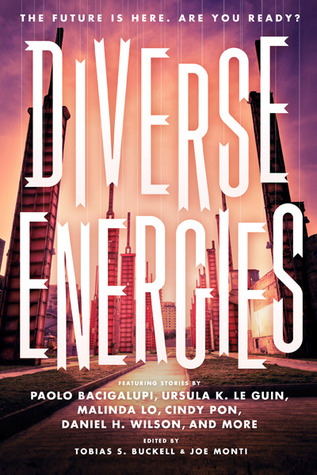
Review: Diverse Energies edited by Tobias Bucknell and Joe Monti

Tags: science fiction, fantasy, dystopian, POC, short story anthology

Summary

“No one can doubt that the wave of the future is not the conquest of the world by a single dogmatic creed but the liberation of the diverse energies of free nations and free men. No one can doubt that cooperation in the pursuit of knowledge must lead to freedom of the mind and freedom of the soul.” —President John F. Kennedy, from a speech at University of California, March 23, 1962

 In a world gone wrong, heroes and villains are not always easy to distinguish and every individual has the ability to contribute something powerful. In this stunning collection of original and rediscovered stories of tragedy and hope, the stars are a diverse group of students, street kids, good girls, kidnappers, and child laborers pitted against their environments, their governments, differing cultures, and sometimes one another as they seek answers in their dystopian worlds. Take a journey through time from a nuclear nightmare of the past to society’s far future beyond Earth with these eleven stories by masters of speculative fiction. Includes stories by Paolo Bacigalupi, Ursula K. Le Guin, Malinda Lo, Cindy Pon, Daniel H. Wilson, and more. [summary from Goodreads]

Review

DIVERSE ENERGIES is like a Halloween trick-or-treat bag: you get some real good ‘uns, but you also get some duds that you always kind of throw back into the bag and hope that you don’t pull out again in your next swipe. It’s definitely a worthwhile read for those interested in the intersection of SFF with POC (hah, so many acronyms), particularly if you enjoy or don’t mind short stories. However, I’m not sure it had the comprehensive punch required for it to break out of its niche for the time being.

Here are some thoughts for most (though unfortunately not all) the short stories:

“Last Day” by Ellen Oh - I felt like this story didn't add anything new to the category of "tales about Japanese people in wartime." The "shocking reveal" towards the end was too sudden to actually move me. 3/5

"Freshee's Frogurt" by Daniel Wilson - Rebellious, murderous robots! Quick, intense, eerily believable. 4/5

"Uncertainty Principle" by K. Tempest Bradford - Attention-holding storytelling. The science aspect felt a little underexplained, though. 4/5

"Pattern Recognition" by Ken Liu – So that’s how one can write about modern China's characteristics. The timeline jumped around a little too abruptly for me, but I felt the idea of this was quite realistic. 3.5/5

"Gods of Dimming Light" by Greg van Eekhout - Bad. Ass. Viking legends? Genomics? Short and fast, but fun! 3.5/5

"Next Door" by Rahul Kanakia - I liked the characters and the world but the pacing was uneven, especially towards the end, when it felt like things rushed to a premature conclusion. 3/5

"Good Girl" by Malinda Lo - Good, controlled balance between emotion, plot, and world-building. Little actually happened and questions were left unanswered at the end, but in a way that felt natural to the MC's understanding of things. 4/5

"A Pocket Full of Dharma" by Paolo Bacigalupi - Great worldbuilding; recognized a lot of elements of the modern China I know in here. The concept of having a person's consciousness in a datacube was fascinating, and the villains were scary. 4/5

"Blue Skies" by Cindy Pon - It's cool to read about a future version of Taipei. Unfortunately, the kidnapping plot felt a bit contrived, which lessened the impact the story's setup could've had for me. 3/5

"What Arms to Hold" by Rajan Khanna - Really wished the story had been slightly more specific as to its setting. 'Twas okay, but forgettable. 3.5/5

"Solitude" by Ursula K. LeGuin – This is the best of the bunch, even though it’s a reprint. But I’m glad the editors decided to include this, because I don’t know if I would’ve heard of this short story otherwise, and it’s brilliant. This is spot-on, a chilling yet fully understandable depiction of communication problems ("CP") between different cultures. 5/5

Cover discussion: I kinda like how the cover doesn't attempt to do anything fancy in terms of designs or symbolic representations of the future, and just lets the focus be simply on the title and the names of authors.

Tu Books / Oct. 1, 2012 / Hardcover / 368pp. / $19.95

e-galley received for review from publisher and NetGalley.

Monday, July 16, 2012

Review: Feed by Mira Grant

Newsflesh Trilogy, Book 1

Tags: dystopian, paranormal, zombies, journalism, blogging, politics

Summary

In the years following a zombie apocalypse that changed our world as we know it forever, adopted siblings Georgia and Shaun Mason work hard as first-class blogger-journalists, combining the hard truth with exciting stories. When Georgia, Shaun, and resident technogeek/fiction writer Buffy are selected to be the exclusive blogging team for Senator Peter Ryman’s presidential campaign, little do they know how much their lives are going to change. For it seems like there’s a murderous conspiracy underfoot, and Georgia, Shaun, and Buffy are going to get pulled right into the middle of it.

Review

For years I had been pulled along by the neverending tides of high praises for FEED before I could finally read it. And while FEED, in my opinion, didn’t quite live up to all that praise, it is still one of the better zombie books out there, albeit gratingly slow-moving at times.

The best thing about FEED is unarguably the world-building. This is what world-building should be like: everything with a reason to be, the science behind the Kellis-Amberlee virus that turns people into zombies explained, the far-reaching consequences of the existence of the virus into every facet of people’s lives, from where they live to how the media has involved since the present day. I was impressed by how well Grant thought everything through in her world.

Unfortunately, the very thing that makes FEED so great is also what primarily contributed to its lowered rating for me. Perhaps in excitement over the amazingly detailed world she created, Grant overindulges in the world-building details—I know, right?! Me, complaining about overindulgence in world-building? How strange. The narration, however, doesn’t leave the world-building well enough alone once the world has already been thoroughly established. Instead, even on page 400 or so, readers still encounter “As you know, reader…” sentences everywhere. The repetition is unnecessary and thoroughly grating, at least on me. It made me feel like Grant didn’t trust the reader to have a complete picture of her Newsflesh world, and thus had to keep on emphasizing the same points, over and over: Shaun’s suicidal Irwin tendencies, Georgia’s antisocial nature, the blood tests (and their annoyance over how often they have to do it—if they’re annoyed, can you imagine how readers might feel, having to read about their blood tests and their irritation over it in every chapter?), and so on.

FEED’s strength—and weakness, at least for me—lay in its world-building, but the characters are good enough as well. Nothing to call home about, but Georgia’s cool and collected narration was admirable, and Shaun and Buffy’s exuberance provided a welcome contrast to her personality. I saw the shocking thing at the ending coming early, so wasn’t that affected one way or another by it.

Overall, FEED should impress those who enjoy postapocalyptic or zombie stories with an emphasis on thorough and believable world-building. It didn’t blow me away emotionally, and the Inner Editor That Could insists that the book would’ve been much better had 200 pages been cut from it, but I still more or less enjoyed the time I spent with it.

Cover discussion: Brilliant. Really conveys the convergence of zombies and blogging in a memorable way.

Orbit / May 1, 2010 / Mass Market Paperback / 608pp. / $9.99

Personal copy.

Thursday, July 5, 2012

Review: The Drowned Cities by Paolo Bacigalupi

Ship Breaker, Book 2

Tags: YA, dystopian, war

Summary

War has ravaged what was previously the United States of America. Two friends and orphaned victims of the war, Mahlia and Mouse, struggle to be safe and to get out of the terrifying hands of the different political/military factions that are all too willing to pressure young "war maggots" to sign up for their cause, lives be damned. With the help of a scary half-man named Tool, a genetically modified superfighter, do Mahlia and Mouse stand a chance to escape to freedom?

Review

This is very clearly one of those “it’s not you, it’s me” situations. Bacigalupi is a great writer. He can come up with a unique dystopian premise, lay it out in all its entirety, and still proceed to shock readers with the depth of emotions he can conjure up for the characters and their predicaments. A less squeamish reader would probably appreciate the brilliance and magnitude of this impressive story. But I squirm over stories about featuring war, violence, and heartless characters.

It is an intriguing feature of Ship Breaker, and now THE DROWNED CITIES, that I don't think readers are ever supposed to like the main characters very much. They're not lovable: a hard childhood has taught Mahlia to be humorless and untrusting, while Mouse, in comparison, is scrawny and cowardly. I guess we're supposed to empathize with the characters and their predicament: they are once-innocent victims of a depraved, dangerous, and corrupt society turned not-so-innocent from the hardships of life. But, as much as I admire Bacigalupi for what he's done, not yielding to literary conventions of having sympathetic main characters, well... that is a literary convention that I like in my books.

THE DROWNED CITIES moves at a slow pace, but is mesmerizing in terms of how it imagines the future. Unlike the majority of YA dystopias published these days, Bacigalupi's vision of the future unsettles and upsets me precisely because it forces us to admit that there are a lot of things wrong in our current world that could very well make the future what Bacigalupi imagines.

Is THE DROWNED CITIES amazing? Yes. Should people read it as an example of what a dystopian should be like, as well as to reflect on the many things we should address in our world in order to prevent such a future from happening? Yes. Did I like it? Not quite. But it's one of those cases where that's okay.

Cover discussion: Hmm. Not bad. I like the dystopian vision of a future Washington, DC--although I admit that when I was reading the book, I had no idea it was set in DC until more than halfway through the book. I'm a little confused about whether those eyes are supposed to belong to Mahlia, though. Do they...well, do they look Asian to you?

Little, Brown / May 1, 2012 / Hardcover / 448pp. / $17.99

e-galley received for review from publisher and NetGalley.

Monday, May 28, 2012

Review: Never Let Me Go by Kazuo Ishiguro

Tags: dystopian

Summary

Kathy reflects on growing up in Hailsham alongside her friends Ruth and Tommy.

Review

NEVER LET ME GO is like a—for lack of a better way to put it—grown-up version of a YA novel. The elements of a YA are all there: the occasionally angsty musings of an adolescent girl; the complex and manipulative best friend; a boarding school with a dystopian feel (two in one!). As Kathy narrates the story, the writing is fitting for the voice of a woman—not overly smart but not dumb either—reflecting on her adolescent years.

But it is the way that NEVER LETS ME GO treats its premise that marks it as not YA. If this were a YA novel (which it very well easily could’ve been, had Kazuo Ishiguro chosen to go that route), there would most likely have been a dramatic ending in which good triumphs over the Ambiguously Bad and they all live happily ever after. I kind of like that this book didn’t do that. Instead, it follows the gradual but inevitable path of characters whose destinies were laid out for them since before they were born.

Ishiguro uses a strategy that I will call “suspenseful foreshadowing” quite liberally, stringing anecdotes along one after another so that you will feel like you can barely stop for breath, something is always about to happen, about to happen. Not a bad strategy, and I like that it seems to reflect more on Kathy’s writing abilities than Ishiguro’s (and it’s a talented writer who can do that).

NEVER LET ME GO is a subtly brilliant and disturbing novel that would be greatly appreciated by readers who like their books a little more thought-provoking, a little less rose-colored or deus ex machina-ridden.

Vintage / March 14, 2006 / Paperback (reprint) / 288pp. / $15.00

Personal copy.

Tuesday, May 22, 2012

Review: The Immortal Rules by Julie Kagawa

Blood of Eden, Book 1

Tags: YA, paranormal, dystopian, vampires

Summary

Allison Sekemoto survives as a fierce, unregistered scavenger in a world where master vampires have laid claim over entire cities and keep the humans in line with scheduled blood-letting. However, tragedy strikes, and Allie is forced to become the monster she has always hated. Her creator, Kanin, is a vampire with a dark, mysterious past and many secrets, the biggest one of which drives Allie out of the city, to survive outside on her own.

Allie meets up with a group of humans on their way to find the rumored Eden, an island city untainted by vampires, where humans live as they did before. But Allie can never fully belong among the humans, no matter how nice Zeke is to her. Society will force her to always remember who she is now, and the situation will arise when she needs to acknowledge just how much of her is human…and how much is vampire.

Review

Despite the oversaturation of the market with vampire stories, I’m still constantly on the lookout for something fresh. Julie Kagawa brings a refreshing grittiness to vampires in her new paranormal-dystopian series, starting with THE IMMORTAL RULES, which, while far from perfect, is still an enjoyable read for the forgiving, vampire-crazy reader type.

I like that Kagawa’s vampires don’t glitter. They don’t try desperately to mimic humanity for the sake of a romantic story. They are manipulative and volatile and scary as all hell—and thus, when the uncommon vampire displays some semblance of human emotion or empathy, you know it’s because of the character, not just for the sake of a story.

THE IMMORTAL RULES is also written in a controlled yet smooth-flowing manner, keeping a tight rein on potentially overdramatic situations, and yet moving the story along from event to event, dialogue to dialogue, in a natural-feeling way. It was nearly effortless—at least for me—to become immersed in the story. It’s not fast-paced, per se (to be quite honest, I have no idea how this book managed to run longer than 400 pages; that number of pages was probably not all necessary but it didn’t deter from my reading experience either), but it is easy to read.

I was quite keen on the first part, where Allie learns about being a vampire and begins to see her city in a different light, but where THE IMMORTAL RULES stumbled for me began when Allie met the humans. There is no nice way to say this, because the human characters in this book are such clichés. There’s a mean girl whose hatred of Allie is unfounded—no, really, I’m not even being overly subjective here, the girl heard that Allie came from a city and was all like, “You beeyotch”…uh, wut?—whose main purpose for being in the story seemed to be to make readers even more sympathetic to Allie’s difficult situation…but if you liked her enough in the first part of the book, then you already are sympathetic to her. There’s a preacher-esque leader who speaks in the “destiny-speak” of adults who think they know everything. Even Zeke, as a love interest, was bland in his perfection: the guy is nice to everyone, likes Allie even though she’s sullen and secretive, and—this is my favorite—engages in very lame banter with his male BFF. I’m telling you, the humans come straight out of a CW beach town drama. I found myself groaning and wishing we were back in Allie’s old city (with Kanin, he of the badassery and no-nonsense nature).

I’m not sure how there came to be such a disjuncture between the effortless grittiness of the first part of the book and the forced camaraderie/backstabbing/bravado of the rest. The villain talks like a done-thrice-over villain from a 1940s comic. Science gets pushed to the wayside for the sake of good triumphing over evil (the wet gun, the wet gun!). My best guess is that Kagawa had a great setting and the ideas for sequels and didn’t allow her characters to get from Point A to Point B without a whole lot of interference in characterization from her.

Despite my frustrations with this novel, I would still be interested in reading the sequel (but there better be fewer stupid humans), because I found Allie sympathetic and the vampire-human tension interesting. THE IMMORTAL RULES won’t be everyone’s cup of tea, but those who enjoy True Blood over The Vampire Diaries or Twilight might consider giving this one a try.

Similar Authors
Stephenie Meyer
Cynthia Hand
Michelle Hodkin

Cover discussion: Oh my g--MY EYESSSS. THEY BURNNNN. WHAT IS THIS CRAP. First of all, if that's supposed to be a tear, it's in the wrong location. Tears are produced in the inside corner of one's eye. They don't just leak out from wherever the hell you feel like it. Secondly, ALLIE IS VERY CLEARLY ASIAN IN THE BOOK. This girl's only Asian if you have yellow fever and are stoned out of your mind. Ladies and gentlemen, I think we have a strong contender for the Worst YA Cover of 2012.

Harlequin Teen / April 24, 2012 / Hardcover / 512pp. / $18.99

e-galley received for review through publisher and NetGalley.

Thursday, April 5, 2012

Review: Eye of the Storm by Kate Messner

Tags: middle grade, dystopian, global warming

Summary

Jaden is the daughter of Stephen Meggs, the renowned scientist who has created a StormSafe community that guarantees protection from the monster storms and tornadoes that are ravaging the entire earth due to climate change. Jaden should feel lucky for the chance to live with her father in the StormSafe community for a summer and attend Eye on Tomorrow, a prestigious science camp for young people. However, unexpected discoveries in the process of working on storm dissipation models with her new friends Alex and Risha make Jaden suspicious of what her father is really working on for his research. The truth is shocking and horrifying, but is there anything that Jaden and her friends can do to stop innocent people from being hurt by the storms?

Review

Kate Messner is a queen when it comes to middle-grade contemporary literature, but her take on MG dystopian does not disappoint. EYE OF THE STORM is a relevant story that contains the meticulous research and believable characters that are trademarks of Messner’s writing.

It’s hard to read EYE OF THE STORM today and not think of the frightening tornadoes that have recently hit the US. It makes the premise all the more believable, the book all the more a great read for kids. Messner blends meteorological science seamlessly into a fast-paced plot, and the book’s message—that if we don’t start doing something about today’s global warming, then the future will be grim indeed—is quite clear. It’s the best way to give kids an important lesson: cool science tossed into an exciting story, the moral easily extrapolated from the all-too-possible setting.

Some things that did frustrate me a little with EYE OF THE STORM were how polarized the adults were, and how dramatic the plot and narration got at times. EYE OF THE STORM felt very much like an “adults did bad things, and now it’s up to us kids to fix the problem” tale, which to me felt like the too conveniently easy way to drive the story’s message home to readers. The last half or third of the book felt like an endless event of friends screaming life-or-death orders/suggestions to one another, storms tearing up things, and glass shattering. Think a scene from the movie Twister, only played out over the course of 100 or so pages. The marathon demands on my heart were rather exhausting and perhaps, I think, not that necessary.

Nevertheless, EYE OF THE STORM is sure to delight its intended audience of middle-grade and juvenile readers. This is one I’d definitely put in schools, libraries, and gift boxes. Relevant, well-written, and exciting, Kate Messner’s latest book deserves to be read.

Cover discussion: I love how unique it is! I love how it keeps the same style as Kate Messner's other MG novels but has a more intense spin to it.

Walker Childrens / Feb. 28, 2012 / Hardcover / 304pp. / $16.99

e-galley received from publisher and NetGalley. Thank you!

Monday, November 7, 2011

Review: Legend by Marie Lu

Legend, Book 1

Tags: YA, dystopian, he-said/she-said

Summary

In the war-happy Republic, located in the former western United States, 15-year-old Day is the most wanted criminal. Not because he’s the most dangerous, but because his elusiveness—he was supposed to have died five years ago, after all—discredits the Republic’s control. When Day’s latest break-in leads to the death of Captain Metias Iparis, Metias’ little sister, the child prodigy June Iparis, vows to be the one to hunt Day down.

But as their lives cross paths and they get to know one another, the truth they learn about the Republic will change them forever…

Review

A premise that sounds like a dystopian Robin Hood? You didn’t have to ask me twice if I wanted to read this. Marie Lu provides us with a solid dystopian read in her debut novel that, while not incredible, still proves to be very enjoyable.

LEGEND’s strength lies in Lu’s writing. Written in alternating POVs, Day’s and June’s voices feel completely natural: both of them have genius-level intelligences, which shows in the way they approach and analyze situations (a great relief from those YA novels whose main characters claim to be smart but then they do or think the most idiotic things). LEGEND will appeal to readers who like their dystopian books endearingly unsentimental, in the way Katniss is a reluctant but still beloved hero. Both June and Day are like that: they are very focused on what needs to be done, and do not exhibit the types of thoughts or behavior that normal teenagers do.

This makes it believable that they live in a world where violence is part of the job description. This is no half-hearted dystopian world: the government does things that leave even me shocked and uncomfortable. LEGEND will surely become one of those books that censorship-happy critics target due to its darkness.

The trouble is, LEGEND’s violence does feel a bit gratuitous. It’s not that I have qualms about violence in YA fiction; I love The Hunger Games, after all. It’s more that I still struggle to understand what purpose the violence in LEGEND serves, except to make the government as scary as possible. But the revelation that June and Day uncover about the government is rather anticlimactic, considering all the setup. I feel more scared by less violence-proven fictional dystopian governments, such as The Giver’s, than I did by LEGEND’s over-the-top controlling government.

While I adored June and Day individually, I felt like their romance left something to be desired. Here, I suppose, is where their age shows, for their mutual attraction seemed to arise more out of the fact that they each find the other to be different than anyone they’ve ever met and less due to an actual liking of one another. Still, I did like them individually, and thought they were pretty well developed in that regard. I had no problem with those two as the main characters, but perhaps if the book hadn’t been sold to me with such a heavy emphasis on an epic romance I would’ve been more impressed.

So LEGEND is not perfect, but solid writing and two sympathetic main characters make it a cut above most other dystopian YA out there. Dystopian fans will surely want to keep this on their radar, though perhaps toning down your expectations a notch will make it a better read for you.

Similar Authors
Veronica Roth (Divergent)
Suzanne Collins

Cover discussion: Um, this cover is FANTASTIC. I love how it goes in the vein of The Hunger Games and is a simple design, yet devastatingly effective at drawing your attention. What's even cooler is that inside (the ARC, at least), Day's sections are printed in gold. Wonder if they'll keep that in the finished copy. I don't see why they wouldn't!

Putnam Juvenile / Nov. 29, 2011 / Hardcover / 336pp. / $17.99

Sent by publisher for review.

Friday, September 2, 2011

Review: The Unwanteds by Lisa McMann

Tags: middle grade, dystopian, fantasy, magic, creativity

Summary

In the land of Quill, all thirteen-year-olds are sorted into one of three categories: Wanteds, Necessaries, and Unwanteds. Wanteds and Necessaries remain in Quill to keep the land running, and the Unwanteds are disposed to their deaths for their violations of creative expression.

Twins Aaron and Alex get separated when Aaron is chosen as a Wanted and Alex is Unwanted. But “Death” is not at all what Alex and the other Unwanteds expected. Instead, they are transported to the magical world of Artime, run by Mr. Today, who teaches the Unwanteds how to use their creativity in magical battle. For Artime is in danger of being exposed, and the Unwanteds will need all of their creativity and magic to overcome Quill’s armies.

Review

A book being touted as the next Harry Potter certainly has a lot to live up to, and while Lisa McMann’s first middle-grade fantasy THE UNWANTEDS doesn’t quite have the immortal boy with the lightning bolt scar’s charm and uniqueness, it nevertheless will be an enjoyable read for the younger reader.

Reading THE UNWANTEDS felt as if I were carrying out my childhood dreams. When you were little, did you ever daydream of living away from home in a magical mansion where every one of your whimsies was right at the tip of your thoughts? Yeah, that was probably the number one thing I thought about during my free time. In that sense, then, reading THE UNWANTEDS was almost a literal return to my childhood. The youthful delight of having near-complete control over your own life; of having magic at your command; of attending an eternal summer camp…that’s part of what you get, reading THE UNWANTEDS.

But not all of it. THE UNWANTEDS contains distinctly dark themes of creativity versus logic, imagination versus asceticism, that make it darker than your usual magical children’s tale. This is part dystopia, after all. More sophisticated readers might find the literal impending war between creativity and pragmatism in the book a little too literal in terms of the book’s themes, but younger readers will probably get a kick out of the minimalization of gray areas.

My biggest problem with THE UNWANTEDS, the one that made me unable to finish the book, was that I simply didn’t connect with or care for any of the characters. Alex and his Unwanted friends tended to blend indistinguishably into one another, and were being pretty snippy and immature pre-teens for the most part. That’s not the problem—after all, Harry Potter was pretty unbearable for many of his adventures; it was more the fact that I couldn’t bring myself to feel bad for the characters or to care about how they ended up.

It is unfortunate that the power of such a magical premise was diminished by bland and unsympathetic characters. This won’t deter all people from reading and enjoying THE UNWANTEDS, but as far as I’m concerned, my lack of connection to the characters draws me away from this adventure and towards more character-driven fantasies.

Similar Authors
J. K. Rowling
Margaret Peterson Haddix

Cover discussion: Quite cool. It's hand-drawn, but with a hint of computer animation. Will probably appeal to video game lovers.

Aladdin / Aug. 30, 2011 / Hardcover / 400pp. / $16.99

Review copy sent by publisher.

Friday, August 26, 2011

Review: All These Things I've Done by Gabrielle Zevin

Tags: YA, dystopian, organized crime, NYC

Summary

Anya Balanchine, daughter of one of New York’s most famous crime bosses, lives in a world where everything is rationed, coffee and chocolate are illegal, and crime families run a very well-organized black market. Since her father’s murder, Anya wants nothing to do with the “family business,” wanting only to take care of her mentally damaged older brother and younger sister.

But when Anya’s ex-boyfriend is poisoned by her family’s chocolate, Anya must unwillingly come to terms with her birthright—both the good and bad points.

Review

With a cover like that, a premise like that, and the name of one of YA’s most highly awarded authors attached to it, how could one not pick this book up? With her trademark intelligent writing and world-building, Gabrielle Zevin’s dystopian ALL THESE THINGS I’VE DONE should be a hit for those who like their YA dystopias a touch on the literary side. It doesn’t quite hit the mark in terms of characterization, but I still very much enjoyed this novel, and look forward to its sequels.

Anya’s New York is like the present day gone to seed and corruption. Famous landmarks have been transformed into slumming hangouts and holding areas, and prepubescent kids rob people off the street with stolen handguns. The setting is fraught with tensions of all sorts, and Zevin makes great use of it. We keenly feel Anya’s struggle to juggle taking care of her family, standing her ground against her corrupt extended family, developing platonic and romantic relationships, and staying on the right side of the law. It is a testimony to the world’s potential that I couldn’t put this book down, even when the plot trudged along like it had all the time in the world to tell its story.

I had the same problem with ALL THESE THINGS I’VE DONE that I had with Gabrielle Zevin’s other books: that is, I know that Zevin’s writing is wonderful and mature and intelligent, but for some reason, I don’t find myself connecting to the characters as much as feel like I should. For example, while Anya and Win’s relationship is pleasant, it didn’t, I dunno, sweep me off my feet or anything. Anya’s “enemies” are supposed to be sinister and scary, but I didn’t really find myself that indignant or protective on Anya’s behalf.

But I feel like that’s just a “me” thing, because most others I know really like Zevin’s writing. Either way, I enjoyed ALL THESE THINGS I’VE DONE. At times it can feel like a really long setup to the second book, but if you’re anything like me, you’ll be able to enjoy the stellar world-building along the way.

Similar Authors
Holly Black

Cover discussion: Easily one of my favorite covers of the year. It's attractive in a way that doesn't involve flashy dresses or brooding models, but instead with a rich complexity that's hidden from first sight by its appearance of starkness.

Farrar, Straus and Giroux / Sept. 6, 2011 / Hardcover / 368pp. / $16.99

Sent by publisher for review.

Thursday, June 9, 2011

Review: Memento Nora by Angie Smibert

Tags: YA, dystopian

Summary

In Nora, Micah, and Winter’s world, people can take pills that make them instantly forget the bad things they see—which comes in handy since bombings within their city are a daily occurrence. On her first trip to the forgetting clinic, Nora finds out what her mother is taking pills to forget, and decides that she must remember it.

She teams up with Micah and Winter to produce a comic, titled “Memento,” depicting the memories they have been told to forget, and it goes viral, catching the attention of the authorities. Now, Nora, Micah, and Winter are in a race to stay one step ahead of the authorities, who will undoubtedly force them to take the big forgetting pill in order to make sure they stay in line.

Review

What happens if people could just make bad memories go away with one pill? What kind of deceitful and harmful world would that create? Angie Smibert answers these scary questions in the shockingly believable MEMENTO NORA, a short and quick-paced dystopian read that will remind you of the best—and worst—parts of hi-tech futuristic thriller movies.

Smibert’s dystopian world-building is believable. Nora, Micah, and Winter live in hi-tech dystopian world, where everything—everything that is not being bombed, or purposely ignored by the authorities, that is—is pristine and perfect and chock-full of personalized advertising. That’s Nora’s life. On the other side is the world in which Micah and Winter live, which is scruffier, less well organized…and, unfortunately, less well-depicted than Nora’s world. While I could picture the orderly world in which Nora lives, I had a more difficult time seeing Winter’s obstacle course of a house, or Micah’s beehive of a communal living area. How do the two different places fit together? I couldn’t really picture how the main characters traveled between the two different worlds.

The book, it seems, focused more on the plot and less on character development. The plot was quick, snappy, and a little frightening, although at times I did feel like it resorted to “off-page” moments to work things out. In comparison, the three protagonists are woefully underdeveloped. They didn’t really stand out to me as unique characters—which is not to say that character development isn’t possible under 200 pages, just that I don’t think MEMENTO NORA did that as much as I wanted. The plot, too, kind of fell off towards the end, speeding towards something that was out of the characters’ control, but which I never fully believed either.

MEMENTO NORA is an interesting and diverting dystopian read, with a decent world-building and plot. In terms of character development, however, I have read others in which I was more invested.

Cover discussion: I'm not the biggest fan. Is that model supposed to be Nora? And against a city skyline? Really now? Is that all it takes to supposedly portray this story?

Marshall Cavendish / April 28, 2011 / Hardcover / 184pp. / $16.99

Requested from author and publisher for review.

Friday, May 20, 2011

Review: Enclave by Ann Aguirre

Razorland, Book 1


Tags: YA, dystopian, New York City

Summary

In the future New York City, society has moved underground, and residents receive a name on their sixteenth birthday. After receiving her name, Deuce is marked as a Hunter. Her job is to patrol the extensive underground tunnels to protect her society of Breeders, Builders, brats, elders, and others from flesh-eating Freaks. Deuce and her Hunter partner, Fade, the only person in their enclave to be born aboveground, discover a rising threat to the enclave, but no one will listen to them. But other problems arise as Deuce and Fade are exiled from the enclave, and they must face the dangerous unknowns of life aboveground.

Review

This book reminded me of why I sometimes HATE when writers for adults attempt to write for younger audiences. People, how many times do I have to remind you that having a good premise and combining that with sloppy worldbuilding, a teenaged protagonist, and a love triangle does NOT automatically qualify a book as YA? I managed to finish ENCLAVE, but only because the whole time I kept on expecting it to get better, for it to eventually blow me away. Well, there was definitely no blowing away: my butt remained firmly in my chair, my forehead practically glued to my desk in frustration.

Good things first, I guess. I like Deuce. She belongs in the new, Katniss-esque camp of female protagonists: resourceful, emotionally reserved, tough on the outside, vulnerable and endearing on the inside.

Now for the litany of issues I had with this book, i.e. Why Poor Deuce Deserved a Better Story. Where do I begin? The writing was mediocre. I felt like no sooner was a character or detail introduced then he/she/it either died, got destroyed, or became Significant, rendering all of those introduced characters and details glaringly device-y. Changes in Deuce and Fade’s lives occurred with little regard for logistical backstory: when Deuce is in danger of death by Freak, a random group of dwarf-people who—surprise!—have been secretly living within the tunnels all along come out to save her. Deuce and Fade are cast to the surface for a tradition that, in essence, should make sense as a way that the elders enforced obedience, but, when it actually happens, feels so contrived.

And that’s the problem I continued to have throughout this book. Despite the promising premise, I feel like ENCLAVE only scratched at the surface of its world’s possibilities. For me, a story’s world has to feel like it can exist without an author’s interference: the book has to read like, say, contemporary YA reads to us, which is to say that all the complexities and possibilities of the world have to feel natural. ENCLAVE’s world did not feel natural to me. It felt like the author was writing in aspects of the world as the story went along, and I was left with too many logistical questions and an utter lack of investment. For example, I’m aware that I was supposed to see Deuce’s enclave as a stifling, cruel, and totalitarian governing system, but I never felt stifled on Deuce’s behalf. Everything in this book was begging me to consider it as dangerous, as suspenseful, as intense—which did not allow me to feel anything naturally, except perhaps boredom. It was just not credible.

Deuce was about the only character in this book that I felt like was even remotely well developed, and I’m beginning to suspect that that’s just a trick of the first-person narration. Fade I felt was trying so hard to fit the mysterious-hot-love-interest quota that he ended up being very uninteresting. And OH GOD CAN I JUST RANT HERE ABOUT THE TRANSPARENCY OF THE LOVE TRIANGLE? So Deuce and Fade get into an altercation with a gang. The gang leader, who displays sociopathic tendencies towards homicide, randomly has a change of heart and joins them on their journey to find utopia, or whatever else is a better word for what they’re looking for. He and Deuce hook up when she’s busy agonizing over Fade. Yawn. The obviousness of the romantic elements of ENCLAVE didn’t help dissuade my snarky notion that the author was trying to fulfill some checklist for How to Write Bestselling YA or something.

I also think ENCLAVE took a big (and ultimately unsuccessful) risk in incorporating “idea-dropping” into its narration. “Idea-dropping” is my just-made-up term for a concept similar to name-dropping. It involves describing common modern items in such a way as to make it clear to us what the characters are describing without actually naming it, since, obviously, the characters don’t know the name for it. The one other time I’ve seen idea-dropping used was in another YA dystopian that ultimately didn’t agree with me. I think it’s a literary technique that panders to readers and doesn’t add anything to the world or the characters. I don’t freaking care that they’re eating Spam. All I needed to know was that they were eating long expired canned food. Spam only has implications for us readers, not the characters. Thus, idea-dropping spoon-feeds the dystopian aspect of a story, but I personally find the spoon-feeding offensive to my readerly intellect. There are better ways to write a dystopian than to idea-drop.

And what is up with the Freaks? Are they supposed to be flesh-eating zombies, or a mutation gone terribly wrong, or something else? Why wasn’t there more of an explanation for their existence so that they would also be less device-y? And are you SERIOUS about the disembodied voice that “speaks” to Deuce (or comes to her in a dream, I couldn’t figure out which) and convinces her to make the right decision, etc etc? I didn’t realize that deus ex machinas were so easily accepted! And don’t even get me started on how Tegan is an expendable ninny who inspires no empathy and is like a girl trying desperately not to be TSTL (“too stupid to live”) but, due to shoddy writing, ends up fitting exactly that expendable role.

My problem with ENCLAVE wasn’t that it read like a setup for the rest of the series. Rather, I just cannot respect a story that skimps so heavily on plot, characterization, and worldbuilding. As far as the trilogy is concerned, this is the end of the road for me. I wish all brave travelers who wish to journey beyond this point the best of luck. I’m going to spend my time on more well written books.

Similar Authors
Lesley Hauge (Nomansland)

Cover discussion: It's alright. It reminds me of a manhole cover. Is it supposed to do that? I actually somewhat prefer the old cover even though it's not very representative of the book. It could be used for a book set in prehistoric times, maybe.

Feiwel & Friends / April 12, 2011 / Hardcover / 272pp. / $16.99

Sent by publisher for review.

Monday, May 2, 2011

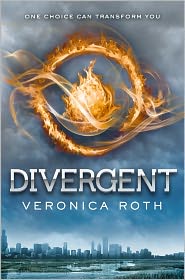
Review: Divergent by Veronica Roth

Tags: YA, dystopian, Chicago

Summary

In a future dystopian Chicago, Tris’ society is divided up into five factions: Abnegation (selflessness, and where Tris grew up), Candor (honesty), Erudite (wisdom), Amity (friendliness), and Dauntless (courage). All people in her society must choose which faction they wish to join at the age of 16, and Tris makes a choice that startles everyone, including herself, when she decides to join Dauntless.

But truly being a part of Dauntless is not so easy, as Tris and other initiates must first pass a long and difficult trial that tests their physical, mental, and emotional strength. As Tris makes friends and maybe even falls in love, she also uncovers a burgeoning plot to upset the order of their society, and learns what it truly means to be Dauntless.

Review

Everyone, listen up. The hype for this book? It’s legit. At long last I do think I may have found the book that I will truly encourage fans in Hunger Games deprivation to pick up. DIVERGENT is fast-paced, with a thoroughly developed dystopian world, engaging plot, and an admirable protagonist. In a word, it is excellent.

As soon as Tris chooses to join the Dauntless faction, DIVERGENT becomes an unputdownable read as Tris navigates the often dangerous trials of her initiation period that keep both her and readers on their toes. It’s a classic enough plot structure—the trials that the protagonist must face in order to meet his or her goal—but one that always holds my attention, and Veronica Roth plots the story exceptionally well. When Tris is not learning how to handle weapons that she may have never seen before in her life, she is cautiously navigating her emotional connections with her new friends or nemeses. Physical action blends seamlessly with relationship intrigue to appeal to readers who generally prefer one over the other.

In the midst of all this action, Tris emerges as perhaps the strongest dystopian heroine I have read about since Katniss. All doubts that I may have had about whether or not she truly belongs in Dauntless disappeared only a few chapters in, and from then on I was firmly rooting for her the whole way. While not resourceful, per se (she is in a new faction, after all), Tris has unmatched mental strength, and just a bit too much determination to prove herself, that help carry her triumphantly through obstacles. In short, I like her. I like her I like her I like her. She is just the sort of girl I hope I could be like if, God forbid, I were ever in her situation.

Supporting characters, while nice and attractive, I wish were developed some more, in particularly Cristina, Tris’ closest female friends through the Dauntless initiation. Tris’ love interest is pretty good as far as love interests in YA speculative fiction usually go: he has no need for silly, enigmatic broodfests, and actually likes Tris for her strength and not because of some impenetrable vague reason like insta-luv (this is my interpretation of it, anyway). The ending, unfortunately, felt rushed, and while I don’t disagree with it being a good way for the book to end, it lacked the forceful punch I was looking for, and to which I felt like the rest of the book had been building up.

My minor quibbles with supporting character development and the ending aside, I found DIVERGENT to be an entrancing read throughout. Dystopian? Strong female protagonist? Fast pace? Subtle critiques on our society’s incessant need to label and categorize everything? Read DIVERGENT for all of them. In the meantime, I will be camping outside the nearest bookstore for the next book in this series, thank you very much.

Similar Authors
Jackson Pearce (Sisters Red)
Suzanne Collins
Scott Westerfeld (Uglies)


Cover discussion: I like it well enough, and it should be unisex enough to attract both male and female readers. Plus that fiery eye-like thing makes more sense after you read the book. :)

Katherine Tegen Books / May 3, 2011 / Hardcover / 496pp. / $17.99

Won on author's blog; another review copy received from publisher.

Tuesday, April 19, 2011

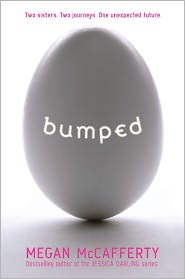
Review, Interview, + GIVEAWAY: Bumped by Megan McCafferty!

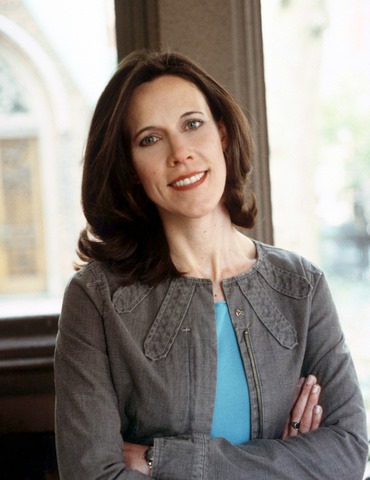
Megan McCafferty is one of my favorite authors. I had the opportunity to read her upcoming dystopian YA, Bumped, back in November, and am finally able to share my review with you, along with a wonderful interview with Megan herself! Exclamation points may be used overexcessively to illustrate my excitement at this!!!

Okay. Let's get straight to it.

Tags: YA, dystopian, teen pregnancy, satire

Summary

Melody and Harmony are identical blond-haired, blue-eyed twins who never knew the other existed until recently. Melody was brought up to be a competitive candidate on the market for professionally impregnated teens. In their world where only teenagers can get pregnant, the Jaydens pay big money for her to be “bumped” by a worthy male specimen to produce their ideal baby.

Meanwhile, Harmony grew up in a highly religious community to be the perfect wife. When she leaves her community to search down Melody and save her sister from her sinful lifestyle, it leads to a huge case of mistaken identity that has both sisters questioning everything they had once believed in about their purpose in life.

Review

Megan McCafferty is the author of the Jessica Darling books, hands-down my all-time favorite contemporary series. The dystopian novel BUMPED is a huge departure from her legacy, but you tone down your instinctual desire to compare it to the Jessica Darling books, it is a fantastically complex story that will provide fodder for thought for multiple rereads.

BUMPED is an example of a dystopian society that is so fully realized and self-sustaining that it becomes very difficult for us outsiders to access. I spent a significant portion of the first half of BUMPED trying to figure out the “rules” of Harmony and Melody’s world, chock-full of futuristic terms, attitudes, and daily routines that seem extremely alien to us.

This may make BUMPED feel like a tryingly slow-moving novel, but once you get into their society’s groove, you quickly realize just how much Megan McCafferty has accomplished. If our currently label-preoccupied, materialistic, and consumeristic society were indeed to suffer from a mysterious virus that makes all adults infertile, you can bet that the resulting society would be almost exactly the one McCafferty has created here. All of the new vocabulary that Harmony and Melody use effortlessly can be traced back to our current world, so that once you’re successfully immersed in the story, you really get it.

At first both sisters came off as a bit flat and indistinguishable for me, but as the story went on they blossomed into uniquely complex individuals that I found myself really rooting for. Melody seems like she’s got everything figured out and going for her, albeit in a rather boring way. The deterioration of her perfect life forces her to finally confront herself with what she really wants, rather than what she was brought up to want. Harmony starts off as an irritatingly preachy girl, but as she becomes further entangled in Melody’s world, and deals with emotional turmoil of her own, I found myself liking her more and more for her determination to do right and stay true to herself in a manipulative world that she does not quite understand.

Supporting characters like Melody’s pregnancy club friends, Melody’s charming best friend Zen, and Jondoe, the star stud whose sperm is in high demand, all have a delightful roundedness to them—roundedness that does not mean they are perfectly bland characters, but instead have the ability to fight for what they want, even if we may not necessarily agree with what they want.

BUMPED is a layered book that will be good for multiple rereads, as each successive reread reveals a new layer of characterization, wordplay, and world-building that you may have noticed in passing in the first read-through but become really impressed by only in subsequent rereads. This, I think, is Megan McCafferty’s ultimate gift as an author: she has a fierce talent for and dedication to writing books that can be enjoyed at multiple levels, good for a permanent fixture on your reread shelf. Avid lovers of her Jessica Darling books, such as myself, will, I think, appreciate that the most about her first foray outside of Jessica’s well-known world, and as a result I’m really looking forward to the sequel and whatever Megan has to share with us next.

Cover discussion: I like my fair share of simple covers, but I'm not sure how I feel about this one. It may be a bit TOO simplistic and "fuzzy" in its intention...?

Balzer + Bray / April 26, 2011 / Hardcover / 336pp. / $16.99

Sent by the author for review. Thank you, Megan!


Interview with Megan McCafferty

1. Tell us something about your inspiration for writing Bumped. (If you get this question too often, tell us something you don't always mention about the inspiration.)

I have answered this question a lot, but I think that says so much about the subject matter. When people hear “only teenagers can have babies and adults pay them to make deliveries” they’re like, “What the WHAT?!” But is it really all that far-fetched? It seems like nearly every day I read an article (with headlines like “Pregnancy Epidemic: 90 teens, 11 Percent of Student Body, Pregnant” or “Teen Auctions Off Her Virginity for 50K,” or “Meet the Twiblings: The Futuristic Insta-Family”) supporting my idea that under certain terrible conditions, the shocking teen pregnancy policies of Bumped could and would be put in practice. Cultural norms are fluid, not fixed.

2. Many people know you as the author of the Jessica Darling series. Did anything about your writing process change between writing the Jessica Darling books and Bumped?

Everything changed. I grew up in Jessica Darling’s world. I knew it inside and out. I’d never invented a whole world before, so it took me a while to find my footing in the futuristic setting and understand all the characters that inhabit it.

3. Bumped is such a thoroughly realized dystopian world, with its own vocabulary, values, systems, etc. How did you keep track of all the details about this world you created?

Thank you! My husband reads a lot of Sci-Fi. He advised me early on that I shouldn’t even try to accurately predict the future, I should just have a good time with it. So that’s what I did. I had fun with the wordplay and worldplay. Once I was immersed in the story, the new world of Bumped became as familiar to me as the boardwalk in Seaside Heights, NJ.

4. Which character or concept in Bumped surprised you the most his/her/its development?

When I started writing the book, I had no idea that Jondoe had as many secrets as Harmony. He’s as much of a product of his parents’ oppressive expectations as the twins are.

5. Jondoe was a pleasant surprise for me, too. :) Now, what is your favorite season, and why?

Summer. I write drafts in fall and winter, revise in spring. Summer means I can relax and recharge by doing research for whatever book comes next.

6. What was the most interesting thing you did to research Bumped?

There’s a character, Ram, who is just the tiniest bit inspired by Bristol Palin’s babydaddy, Levi Johnston. For a few days I devoted myself to watching his interviews on YouTube so I could borrow his body language and speech patterns. I now know more about Levi Johnston than anyone could possibly need to know.

7. I'll bet that's true! Say you have the power to bring one deceased author back to life. Who would you pick, and why?

I’d bring back J.D. Salinger because it would be amusing to watch him react to his own resurrection. “Goddamn phonies. I’m dead. Leave me alone.”
8. Name one extreme sport you would love to try, and one you will never, ever do. (Yes, you can make an extreme sport up: after all, extreme ironing is an acknowledged activity.)

I had emergency back surgery when I was 25, so you’ll never see me bungee jumping, sky-diving, or otherwise recklessly hurling my body around. Extreme Karaoke is more my style.

9. I like the sound of that! Finally, what dystopian novels would you recommend to readers?

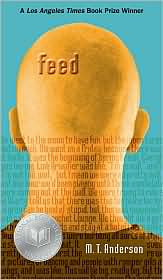
There aren’t too many satirical dystopian YA novels, but Feed by M.T. Anderson is the one I thought about most when I was writing Bumped. It’s brilliant, hilarious and so close becoming a terrifying reality.


Giveaway Opportunity!

Thank you, Megan, for answering my questions! I am going to her launch party for Bumped next Tuesday, April 26 in Princeton, NJ, so as a gift to you readers, I am going to give away a signed copy of Bumped for one winner! And, heck, let's make it international, because I can't spread the love enough for this amazing author's books. To enter, please fill out this form here, making sure to answer the question relevantly. This giveaway ends Friday, May 13, 2011. Good luck!

Tuesday, March 15, 2011

Review: Wither by Lauren DeStefano

Tags: YA, dystopian, love

Summary

Rhine Ellery lives in a future world where genetic science has unexpectedly shortened women’s lifespans to 20 and men’s to 25. In Rhine’s world, girls are often kidnapped to become brides for rich men desperate to procreate before their time runs out. When Rhine is kidnapped to be one of House Governor Linden’s brides, all she wants is to escape and go back to her old life with her twin brother, despite her new luxurious surroundings.

Linden is not a bad man, but still Rhine dreams of the day when she can finally escape. As she gets to know her sister-wives and a servant named Gabriel, Rhine struggles to hold onto herself and the idea of home that she wants to go back to.

Review

WITHER is a stunner of a dystopian YA debut. It immediately blew its way onto my favorites list, and does its breathtaking cover and alluring jacket summary justice.

I’ll be honest: at first I thought that WITHER’s premise was going to be all flash and no substance, but Lauren DeStefano immersed me in Rhine’s world quite convincingly. Reading WITHER is perhaps a lot like looking at an enchanted old piece of art: things look discolored and damaged at the surface, but you’re drawn to the magic whispering of beauty beneath. Neither Rhine’s world nor the writing feels particularly “pretty”: the narration often seems to be told at a distance from its occurrence, and I’m still having trouble wrapping my mind around the very concept that a world in which people died before the age of 25 could exist as a potential future for us.

Nevertheless, there’s something about the story that compels you to keep reading. Trapped both physically and emotionally by her situation, Rhine cannot be as vibrant a protagonist as others have been, but we still feel drawn to her and are amazed by her doggedness, though we might not necessarily empathize with or even like her. The story’s setup may feel a little far-fetched, but it’s the careful and thorough character development and emotional range that brought me to my knees before this book’s achievement. There is no melodrama here: for example, Rhine’s sister-wives’ reactions to their shared situation feel instinctual. Gabriel worms his way into our hearts as subtly and dependently as he does Rhine’s, but even Linden gets our sympathy vote, and it becomes truly difficult to decide whether Rhine is better off with Gabriel or Linden. The only character who seems a little underdeveloped is Housemaster Vaughn, he of the dreaded Voldemort-esque presence over the entire household.

Others I’ve talked to have mentioned a slight disconnect they felt from Rhine, her world, and other characters, but I didn’t really have this problem. Rhine keeps a cool face yet simmers with anger and despair within—and she has every reason to be so. After all, no matter how luxurious her new life is, it was not by choice, and yet she has to act at least grateful lest her captors easily replace her with another girl they steal off the streets.

WITHER is one hell of a powerful read, intriguing, thought-provoking, and an amazing example of dystopian literature at its best. I wouldn’t hesitate to recommend it to anyone who wants to experience a story that will immerse them utterly in a strange and ominous world with characters that will imprint themselves on your heart. I have no doubt that this book will stay on my “Best of 2011” list at the end of this year.

Similar Authors
Nancy Farmer
Lois Lowry

Writing: 5/5
Characters: 5/5
Plot: 5/5

Overall Rating: 5 out of 5


Cover discussion: 5 out of 5 - This has got to be hard to beat as my favorite cover of 2011. It has everything: a stunning use of complementary colors, texture, geometric elaboration. I was blown away.

Simon & Schuster / Mar. 22, 2011 / Hardcover / 368pp. / $17.99

Received from publisher for review. A million thank yous!

Thursday, November 18, 2010

Review: Matched by Ally Condie

Tags: YA, dystopian, romance, love triangle

Summary

Cassia's Society is perfect. The Society's Officials calculate all the data and give you what's best for you: your job, your food intake, and most especially your Match, the person with whom you'd be perfect and raise a family.

At Cassia's Matching ceremony, she feels glad when her best friend Xander's image appears as her ideal mate. However, a glitch in the software reveals another's image: Ky, a reserved boy in her neighborhood with an unusual history. Cassia can't help but feel all the more attracted to Ky as she learns more about him. With things starting to crumble all around them--tense, missing Officials, mistakes that should not have been made--what does the future hold for Cassia and the two most important boys in her life?

Review

MATCHED is quite possibly the most highly anticipated YA novel of late 2010, what with its incredible 7-figure book deal announced earlier this year. So it is to be expected that readers will come into story with high expectations. While MATCHED does not quite live up to all its hype, it is still a relatively powerful dystopian work that will keep you up late reading.

The most stunning part of this book, the thing that made me want to give this book a 5-star rating right off the bat, is its world-building. It is all too easy to do a half-assed job of creating a frightening believable future world. Thankfully, Ally Condie is no fool, and the world of the Society is one that thrums with realistically nervous energy. The world is laid out for us from the first chapter, told with an almost hypnotic narration. I don't think I've seen kind of dystopian worldbuilding this convincing since Lois Lowry's The Giver. (The world in The Hunger Games, of course, is excellent, but it is a low-tech kind of world, whereas the worlds in both MATCHED and The Giver are more high-tech, which involves a different kind of world-building.)

While the writing was fantastic, I felt like there were pieces missing from the characterization and plot. I enjoyed Cassia's relatable wavering between being the perfectly obedient citizen, the way she's been her whole life, and daring to question and doubt. However, I found that I wasn't able to connect with the developing romance between Cassia and Ky the way I wanted to, the way the story needs readers to in order for everything to be justified. Ky is an interesting character, to be sure, but neither of them did much throughout the story. I understand that under such a heavily surveillanced Society, it would be almost impossible for Cassia and Ky to develop love the way we know it, but still. That was what the story needed to do in order for everything else to fall into place, whether it's near impossible or not, and unfortunately that aspect didn't pull through for me.

MATCHED is a highly accomplished work of literature. Ally Condie quite obviously has a wonderful way with words, though the story part feels slightly lacking. I will hope that future installments in this series up the stakes in order to grab on hard to me and never let me go.

Writing: 4/5
Characters: 3/5
Plot: 3/5

Overall Rating: 3.5 out of 5


Cover discussion: 4 out of 5 - It is breathtaking. Shiny and simple and straightforward, both beautiful and creepy, like Cassia's world.

Penguin / Nov. 30, 2010 / Hardcover / 384pp. / $17.99

ARC picked up at BEA.

Saturday, November 13, 2010

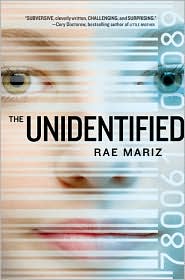
Review: The Unidentified by Rae Mariz

Tags: YA, dystopian, technology, networking

Summary

Katey “Kid” Dade feels out of place in the Game, the futuristic school run by Corporations that observe everyone for market research. While her best friend embraces the hectic, consumerist, public lifestyle, Kid isn’t as concerned that she doesn’t have a large number of people subscribing to her stream, or that she is absolutely mediocre by Game standards.

Then Kid witnesses an unauthorized act of rebellion by a mysterious group called the Unidentified and gets pulled into a type of game of its own. What does this group want from the Corporations? Will Kid get played by these groups, or will she and her friends find a way to overthrow the organizations that have an eye, ear, and hand on them at all times?

Review

It’s been a while since I’ve read a book that has impressed me, and so when I picked up and got instantly sucked into THE UNIDENTIFIED’s riveting and eerily familiar world, I was beside myself with happiness. THE UNIDENTIFIED is smart, well-written, and suspenseful, the perfect example of what dystopian literature should be: a fully realized and recognizable world without forgoing characterization and plot.

Rae Mariz impressively introduces us to a shocking and complex futuristic world, one in which privacy has no meaning thanks to the constant flow of information and technological interconnection. With Facebook’s recent introduction of the disconcertingly stalker-like “See Friendship” button, the issues regarding privacy that THE UNIDENTIFIED explores in such an entertaining and intelligent fashion are so much more immediately relevant. Rae Mariz succeeds in crafting for us a scarily plausible world that is possibly an inevitable extrapolation of the already network-filled world of Facebook and Twitter that we live in.

THE UNIDENTIFIED is smart, but it’s also hardly boring. Kid’s voice is fresh, with just the right amount of quippy attitude. She’s the perfect balance of the observant outsider with the propensity to create change, and the gullible market to which the Corporations are pandering. And Kid’s not the only interesting and well-developed characters. Her two best friends, Ari and Mikey, light up the page with their very different personalities whenever they appear in a scene. Even more minor characters are fully realized with their limited “on-page” time. The characterization is really an incredible accomplishment for a 300-something page book, which most might even consider short for modern dystopian novel standards.

I really wish I had the capacity to speak more about THE UNIDENTIFIED’s marvelous critique of the infiltration of networking websites in our lives. But I’ll leave that to the academics, and just let you know that this book does it, along with providing us a highly unputdownable adventure. I don’t think I can recommend this book enough. READ IT if you’re looking for smart and snappy dystopian literature.

Similar Authors
Cory Doctorow
George Orwell

Writing: 5/5
Characters: 5/5
Plot: 5/5

Overall Rating: 5 out of 5


Cover discussion: 3.5 out of 5 - I think it was designed to be disconcerting. The genericness of the face (so unlike how I imagined Kid's) superimposed with the bar codes...creepyyy.

Balzer + Bray / Oct. 5, 2010 / Hardcover / 304pp. / $16.99

Copy borrowed from library.

Sunday, March 14, 2010

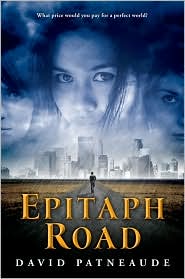
Review: Epitaph Road by David Patneaude

Tags: middle grade, YA, dystopian, sexism, bioterrorism

Rating: 3.5 out of 5


Summary

In 2067, a potent virus known as Elisha’s Bear wipes out 97% of the world’s male population. Thirty years later, women have rebuilt the world into a much better place than it was before the Bear. In this structured world, 14-year-old Kellen Dent feels like an isolated freak, with all the women’s suspicious eyes on him. Part of him longs to head into the wilderness and join his solitary fisherman father.

Then Kellen discovers that a recurrence of the Bear threatens his father at the mostly-male community he lives in. Along with two female friends, cousins Tia and Sunday, Kellen journeys to find his father and warn him of the impending viral outbreak before it’s too late. In doing so, however, they discover the truth behind the Bear, their society as it is, and a future threat that they must stop before all hell breaks loose.

Review

EPITAPH ROAD is an entertaining, though not spectacular, dystopian read that creatively imagines a world gone awry from the actions of men (war, rape, etc.) and rebuilt with the capable—albeit misguided—hands of women. The story is creative, yet feels incomplete in some areas.

Kellen’s world takes a while to build up, but it ends up being a fairly realistic portrayal of what the world could look like if we continue on our irresponsible paths. David Patneaude envisions a world destroyed by the actions of men and turns sexism on its head: it was interesting to see women’s reactions to Kellen, as if he—a rather mild-mannered-to-the-point-of-being-maybe-boring-and-generic male narrator—could be held accountable for centuries of destruction. While the 21st-century history lessons felt rather laundry listed, they provided a helpful timeline for the reasoning of the existence of Kellen’s world.

Unfortunately, EPITAPH ROAD was not as engaging as I wanted it to be, on account of a lack of complete development across all important fields. The concept of Kellen’s world is disconcertingly plausible, but parts of it failed to take into account the believable passage of time—for example, how have things such as the climate changed a hundred years from now? How have people adapted their lifestyles to accommodate such unfathomable natural evolutions? A few fancy electronic gadgets thrown in does not a futuristic world make. In addition, the story seemed to rely too much on the fanciful idea of its dystopia and thus allows neither the main characters nor the plot to be fully fleshed out. Kellen, Tia, and Sunday often felt like stage actors playing their way through the action and narrow escapes, and the majority of the story did not lead up to its “apocalyptic threat” climax.

Ultimately, EPITAPH ROAD is not a standout example of dystopian lit, but its mix of action and “ungendered” interactions (i.e. little romance to “bog it down”) will make it a good read for young male readers who are on the brink of discovering authors like Scott Westerfeld.

Similar Authors
Scott Westerfeld (Uglies series)
Michael Grant (Gone)

Writing: 3/5
Characters: 4/5
Plot: 3/5

Overall Rating: 3.5 out of 5


Cover discussion: 3 out of 5 - See, now, this is, like, HIGHLY evocative of a movie promotion poster. Which just kind of makes me laugh, because, like most movie posters, this one totally does not capture the feel that I felt this book wanted to take: that of danger, and, uh, a dystopia.

EgmontUSA / March 23, 2010 / Hardcover / 272pp. / $16.99

ARC received at NCTE.

Sunday, March 7, 2010

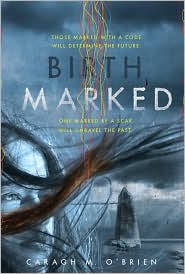
Review: Birthmarked by Caragh O'Brien

Tags: YA, dystopian, action, babies, pregnancy, genetics

Rating: 5 out of 5


Summary

16-year-old Gaia Stone follows in her mother’s footsteps as midwife for her section of town. Every month they advance the first three babies they deliver into the Enclave, the unknown life behind the stone wall. When Gaia’s parents are taken by Enclave soldiers without explanation, however, Gaia sets off on a journey into the Enclave to rescue her parents. What she learns beyond the wall about the advanced babies, the Enclave, and all of their futures is more shocking than anything she could’ve imagined.

Review

Words fail to adequately describe how astonishingly completely Caragh O’Brien drew me into Gaia’s dystopian world in this debut YA novel. Holy cow! BIRTHMARKED is a layered and action-packed dystopian treat that just might satisfy readers eagerly awaiting the third and final installment of The Hunger Games series.

I am absolutely bowled over by how well-written this book is. Caragh O’Brien presents us with interesting characters that we want to follow through all their suspenseful adventures and encounters. From Gaia, the determined “everywoman” protagonist, to the alluring and quietly troubled Captain Gray, to everyone who helps or harms Gaia along the way…all are engaging and three-dimensional to capture our attention from the start and hold on throughout.

A dystopian novel is nothing without a well executed and faithfully imagined world-gone-wrong. Luckily, Gaia’s world is one of the best I’ve read about in a long time, high up there with Suzanne Collins’ The Hunger Games and Maria Snyder’s Poison Study. BIRTHMARKED starts with a bang in the first chapter and never lets up. There’s plenty of mystery, code-breaking, narrow escapes, and running to satisfy fans of action and adventure, and it’s all wrapped within a fully realized dystopia.

I don’t think my review was enough to express my admiration of and love for this book, but rest assured that if this sounds even mildly interesting to you, then you will NOT be able to put it down!

Similar Authors
Suzanne Collins
Catherine Fisher (Incarceron)
Maria V. Snyder (Poison Study)

Writing: 5/5
Characters: 5/5
Plot: 5/5

Overall Rating: 5 out of 5


Cover discussion: 3 out of 5 - It's not...bad, I guess. But it's also not the best that I think it could've been. My favorite part is the colorful twisties in the center that kind of echo DNA.

Roaring Book Press / Mar. 30, 2010 / Hardcover / 368pp. / $16.99

ARC picked up at NCTE conference.

LinkWithin

Related Posts Plugin for WordPress, Blogger...