Tuesday, April 9, 2013

Top Ten Favorite Books I Read Before I Was a Blogger

Top Ten Tuesday is a weekly meme hosted over at The Broke and the Bookish!

I love this week's TTT topic. Some days I even miss my reading habits back before I blogged, when I'd just step into a library or bookstore, pick up the titles that caught my eye, and give them a try. The following books run the gamut from children's classics to overlooked gems.
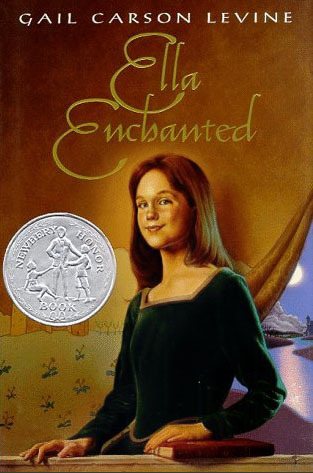
Ella Enchanted by Gail Carson Levine

I devoured books like I did food in my early years: consistently, but with little discrepancy between one type or another, and little interest in discerning the differences. That all changed when I found Ella Enchanted in fifth grade. Suddenly, reading could be magical. Characters could be role models I aspired towards.
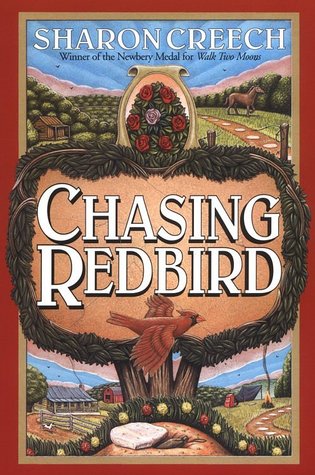
Chasing Redbird by Sharon Creech

Sixth Grade Honors English introduced me to Sharon Creech, and while I love all of her books, Chasing Redbird holds a special place in my heart. Every time I finished rereading this, I, too, wanted to discover an old abandoned trail behind my house that led me through off-the-grid mountains and familiy secrets. And, of course, I wanted a gorgeous boy to notice me as well.

Homeless Bird by Gloria Whelan

Homeless Bird was a random find I came across at my school's annual book fair. It was the first time I can distinctly remember reading about a girl who comes from a different culture and land than me, and yet made such a lasting impression on me.

Kissing Doorknobs by Terry Spencer Hesser

Another random school book fair find, this book both terrified and enthralled me. Hesser wrote about Tara's struggle with OCD with such painful conviction that my eighth-grade self was convinced this was a memoir. I think this was pretty much the only book I read over and over again for several months that year.

The Hero and the Crown by Robin McKinley

Here, finally, be a book on my list that many people have probably read! This random library pick of mine was probably way out of my league of comprehension in middle school, but was undoubtedly what led me to what is now my favorite genre: fantasy. This book will never budge from its place on the top of my McKinley favorites, because of its significance to me and my reading habits.
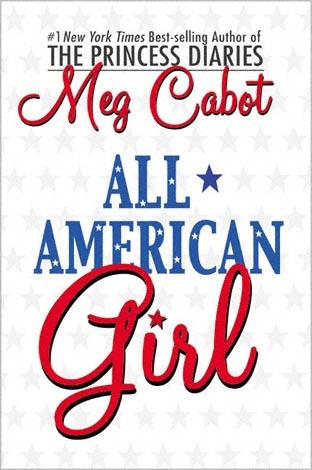
All-American Girl by Meg Cabot

The Princess Diaries were charming, but All-American Girl was my religion. There were lots I loved about it, from Samantha's pitch-perfect voice to the romance, but what I remember most is being in awe of Samantha for being able to pull off wearing combat boots with white-out daisies drawn on them.
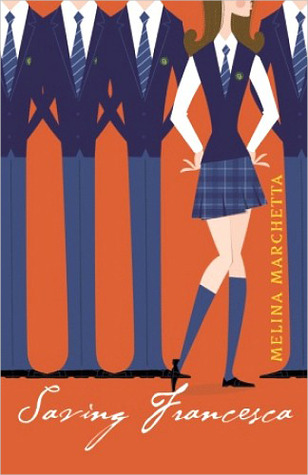
Saving Francesca by Melina Marchetta

Her later books may have been more skillfully written, but Saving Francesca will always be my beloved for introducing me to Melina Marchetta (and Will Trombal, ugh my heart). I was Francesca and yet I wasn't, because she and her friends were effortlessly cooler and more enviable than I could claim to be at that age.


Carolyn Mackler may have gone on to write better books, but her debut will forever hold a space on my shelf. I wore out my library's copy of this with the number of times I borrowed it. There have been countless of contemporary YA books about moving and first love published since then, but this one was what started it all for me.
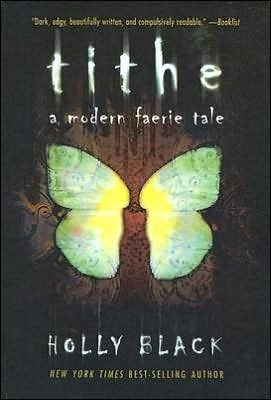
Tithe by Holly Black

And now we get to the good and dark stuff! This book was totally out of my league in terms of coolness points, but I read it at that sweet-spot age when arbitrary moody protagonists and I would forever retain a connection. Plus, I love saying the name "Rath Roiben Rye" to myself, over and over...


Ah, I miss those days when I could walk into a bookstore and randomly pick up a book that looked and sounded good and have it later become one of my favorite books of my high school years. Libba Bray and Gemma Doyle did historical, paranormal, and darkly romantic waaaaay before anyone else did, which is why little has lived up to this book since for me.


I'm intrigued by how so many of my childhood favorite books seemed to be award winners (just look at the disproportionate number of medals gracing the covers above). Nowadays, award winners seem to be a hit-or-miss with me. Have you, like me, ever wondered whether or not you would've loved a book as much as you did had you not read it exactly at the right point in your life?

Sunday, April 7, 2013

Review: Mountains Beyond Mountains by Tracy Kidder

Tags: nonfiction, biography, global health

Summary

This powerful and inspiring new book shows how one person can make a difference, as Kidder tells the true story of a gifted man who is in love with the world and has set out to do all he can to cure it.

At the center of Mountains Beyond Mountains stands Paul Farmer. Doctor, Harvard professor, renowned infectious-disease specialist, anthropologist, the recipient of a MacArthur “genius” grant, world-class Robin Hood, Farmer was brought up in a bus and on a boat, and in medical school found his life’s calling: to diagnose and cure infectious diseases and to bring the lifesaving tools of modern medicine to those who need them most. This magnificent book shows how radical change can be fostered in situations that seem insurmountable, and it also shows how a meaningful life can be created, as Farmer—brilliant, charismatic, charming, both a leader in international health and a doctor who finds time to make house calls in Boston and the mountains of Haiti—blasts through convention to get results. [summary from Goodreads]

Review

You’re not supposed to love this book. To do so would be to fall to the seduction of blind idolatry, and Farmer, the book’s subject, even points out that this is not his goal: the goal isn’t to convince more people to BE like Farmer, but rather to think like him, to believe in what he believes. As a fiction reader/writer who only sporadically dabbles in nonfiction, I find it hard to consolidate the opinions of the two types of readers in me: the one who reads to learn the craft of writing, and the one who wants to be moved by new, eye-opening reading experiences.

Research aside, Kidder’s writing style and his way of creating “characters” is simplistic. He basically throws a million details, PIH-er vocabulary, Farmer quotes, and anecdotes at you and essentially commands you to be convincingly immersed in their world. And, if you don’t actually feel immersed, because the words and details on the page are basically deliberately arrhythmic, Kidder and Farmer will give you the steady “are-you-stupid” stare—you don’t get it, do you, because you’re not smart enough to get it, you will never be able to truly understand and get the inner workings of Farmer’s mind and soul.

Actually, Kidder addresses this in his book. I think it’s partly the reason for why he actually writes himself as a character into his book: because Paul Farmer is so easy to deify, with his nerdily bemused made-up vocabulary and quips, his grand visions, his inexplicable endless resource of energy, that we mere mortal readers need someone in the book with whom we can connect and empathize. Kidder is not especially likable in the book: he essentially takes on the role of Devil’s advocate and asks Farmer all the questions that we readers are thinking but would never dare admit that we’re thinking: Can you really do what you envision? How can you exist without a solid flow of monetary support? Is it really worthwhile for you to use your time and money to help someone with just a 5% chance of living past age thirty? Kidder places himself as the dumb normal man because that’s how we’re all feeling in the shadow of Farmer. And this leads to one of the ongoing emotional contradictions we have regarding this book: Farmer makes us feel guilty for not ourselves being a part of his cause, and then we feel angry that Farmer is making ourselves feel guilty by example, etc.

The debate over the best way to portray Farmer and his work aside (is a print book, with all its limitations and the conscious/subconscious selectivity of language, the best medium through which to convey Farmer’s beliefs and dreams?), the book’s message is one that grows on you, to ultimately become something you go back to, again and again. It doesn’t smack you over the head with itself: for most of the book, I was still struggling between what it is that Farmer and Kidder were trying to make me feel, and to believe in the feasibility of Farmer’s vision, not only as a reader believes in a book’s world but as a frustrated individual believes in the vision’s place in our real world.

 There are many different things that many different readers can take away from MOUNTAINS BEYOND MOUNTAINS. You could feel ridicule masking insecurity over Farmer’s and PIH’s actions. You could take the book as an inspirational call to arms—and then be stranded because you don’t know how to make the best use of your arms. You can say, that’s nice, this is a nice biography about a nice, good man, and then move on to the next book in your TBR pile. (The book—Farmer and Kidder—also preempts any seemingly original emotional and intellectual responses to itself because it works all these different possible responses into its narrative. The self-awareness of this book is super annoying at times!)

What I took away from this book, however, is this: the world is a sucky place, and most of the suckiness is the result of our—humans’—interferences with the natural state of things, by imposing structures and systems on everything and creating disparities. As Farmer says, suffering is a human creation, and then we devise ways to ease that suffering, but only for the people who contributed to the creation of that suffering in the first place. And it’s really easy for us individuals to feel frustrated and helpless in the face of such systems that claim, but fail, to benefit humanity (see: the big mess that is the United States congressional system).

 But rather than wrap ourselves in that helplessness and frustration, we should believe, first and foremost, in the power of the individual to help others, and then in the power of a collective of like-minded individuals to enact even greater changes, essentially beating the system and establishing their own system that is based upon actual observation and experience at the individual level. This is why Farmer continues to trek seven hours into the central plateau of Haiti in order to call on just one patient: without that focus on the individual, PIH’s system will become like every other system in history and the world that has failed in its missives, tangled up in bureaucracy and financial economy and the like. 

Focusing on the individual is doable, and essential, and I can do it, and you can do it, and everyone can do it, and this dream that the world can be an inexplicably better place, however opaque the path there is.

Random House / Aug. 31, 2004 / Paperback (reprint) / 322pp. / $16.00

Personal copy.

Thursday, April 4, 2013

Where in the World Will Steph Be? Spring 2013

The ride here at Steph Su Reads is about to get a little rocky, because this little blogger has been furiously researching plane flights, hostels, and attractions in preparation for lots and lots and lots of traveling. How exciting!

Up in April 2013 are a bunch of small trips to some exceptional places in China, like Jiuzhaigou Valley in Sichuan Province, known for its surreal turquoise lakes against green mountains:
www.onebigphoto.com
Zhangjiajie National Forest Park in Hunan Province, inspiration for the Avatar mountains:
www.explorezhangjiajie.com
Huang Shan (Yellow Mountain) in Anhui Province, iconic Chinese mountain landscape. I am told that watching the sunrise from the top of the mountain is one of those heavenly experiences. Wouldn't miss it for the world:
commons.wikimedia.org

In May 2013, I return to home sweet home in New Jersey in the States for three weeks! My main activities will most likely include reading a ton of books and watching the third season of Veronica Mars on my family's TV (and biting my nails in hopes that it's not as bad as most seem to concede it is). I intend to visit the usual suspects in the area, so hit me up when I am back!

In the last week of May, my travels will hit a crazy high as I visit four countries in one week. I fly from the States to Taiwan in time to attend my cousin's wedding. Then, I go to Singapore for a few days, because I was invited to be a keynote speaker and panelist at the Asian Festival of Children's Content! Yes, it is as crazy-intimidating as it sounds! I am making a speech about "Getting the Most Out of Blogging" and participating in a panel called "Blogging--Today and Tomorrow". Anyone got any suggestions for things I must talk about?

I'm only in Singapore for a few days, because soon after the AFCC, I'm flying back to Taiwan to meet up with my family as we head on a now-rare family vacation altogether to the Tateyama-Kurobe Alpine Route in Japan. I don't know very much about it except that it looks like a place I'd like:
www.info-toyama.com

Yep, don't need to know any more. Sign me up.

My trip with the family to Japan brings us into June, during which I have plans to go back to China and do some backpacking around (provided the latest outbreak of the avian flu doesn't get worse). Where shall I go? Far out west into Uyghur culture and deserts and yurts in Xinjiang Province? South to beautiful Yunnan and Guanxi Provinces, with the kinds of landscapes that have been associated with China for thousands of years? EVERYWHERE???

And after that, Steph? Where will you go then?

So this post serves as a preemptive apology for any sporadic absences of mine from this blog. I will do my best to update you all with my doings, slowly but surely. Thanks!

Monday, April 1, 2013

Review: This Is What Happy Looks Like by Jennifer E. Smith

Tags: YA, contemporary, romance, small towns

Summary

G emails E by accident and the two strike up a never-ending interaction that both feel is one-of-a-kind. There are only several problems that the two of them can’t work out. First, G is Graham Larkin, the hottest new Hollywood star with a bevy of teenaged female fans all around the world and an almost equally large crowd of paparazzi following him everywhere. And E is Ellie O’Neill, a dreamer-poet living in Middle-of-Nowhere, Maine, who has her own reasons for wanting to avoid the spotlight.

Review

I was head over heels for the first 25% of the book, and then meh for the rest of it. Oh, there’s nothing wrong with THIS IS WHAT HAPPY LOOKS LIKE at all, but immediately after the two main characters finally met up, the romantic anticipation fizzled and there was a sense of “what next?” floating among readers and the narrative.

Don’t get me wrong: Graham and Ellie are adorable, separately and together. They are the kind of people you want dating your best friends: they’re nice and well-read and like sunsets and cute animals and hand-holding. Yes, things in this book’s world are a bit tame, especially Graham’s oh-so-cutesy humor, but hey, I’m not going to hold that against the book: it’s rare that we find a YA romance where at least one party is not either TSTL or a jerk.

For the most part, THIS IS WHAT HAPPY LOOKS LIKE is a dream come true for readers who, like me, wished their whole lives for a squee-worthy romance between a nice movie star and a nice ordinary girl. But then, as in most Jennifer Smith novels, there’s the extra dimension of family problems. Again, there’s nothing inherently wrong with including family issues into a contemporary romance, but it just wasn’t what I wanted to read about when I picked this book up. I wanted the never-gets-old sparkly tension of falling in love with someone new, of gradually getting to know them through cheeky emails, of the first time seeing them and thinking to yourself, “Oh. I have been waiting for this my whole life.” Only all of that happened in the first quarter of the book, and then the rest of it didn’t seem to add much more to Graham and Ellie’s relationship. It just didn’t do it for me.

Nevertheless, I would still recommend THIS IS WHAT HAPPY LOOKS LIKE to readers looking for a light romance. The characters and the picture-perfect setting of small-town Maine make this the YA romance that a lot of readers are looking for.

Similar Authors
Kristan Higgins
Maureen Johnson

Cover discussion: I really like how Jennifer Smith's last two contemporary romances have gotten these related but still distinctive covers. They stand out from the stock-photo covers of other YA contemporary romances for their originality.

Poppy / April 2, 2013 / Hardcover / 416pp. / $17.99

e-galley received from publisher and NetGalley.

LinkWithin

Related Posts Plugin for WordPress, Blogger...